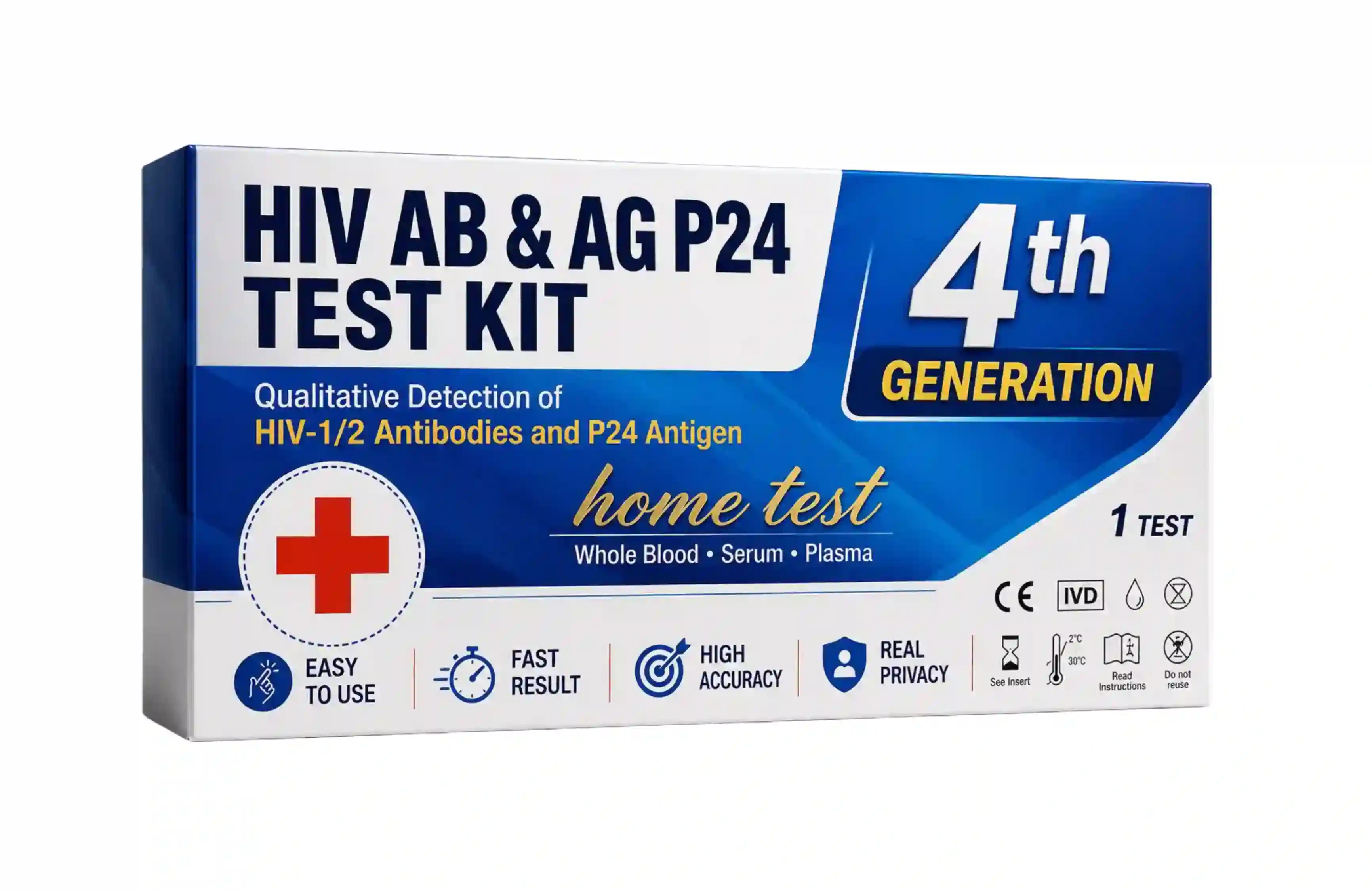
HIV Ab/Ag P24 Test Kit (4th Generation)
The HIV Ab/Ag P24 Test Kit (4th Generation) is a self-use screening product designed to identify bot...
Explore FDA/CE approved HIV and STD self test kits with confidential delivery across Dubai, Abu Dhabi, Sharjah, Ajman, Fujairah, Ras Al Khaimah, Umm Al Quwain and all UAE emirates. Shop clinically trusted HIV test kits, STD screening panels, Gonorrhea test kits, Chlamydia test kits, Herpes screening kits, Hepatitis test kits and rapid at-home screening solutions with discreet packaging and fast UAE-wide delivery.
The HIV Ab/Ag P24 Test Kit (4th Generation) is a self-use screening product designed to identify bot...
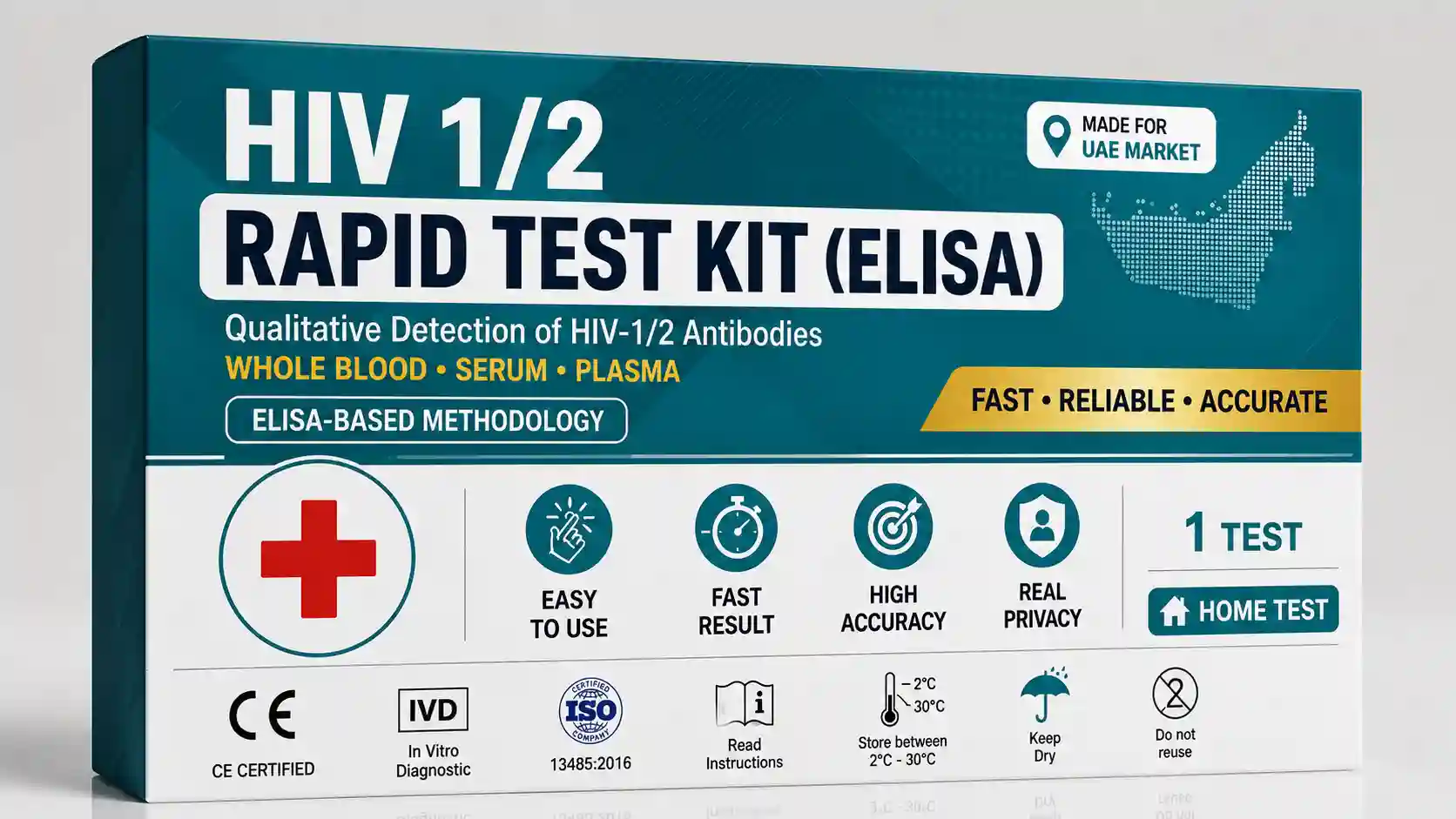
The HIV 1/2 Rapid Test Kit (ELISA) is a self-use antibody detection product designed for straightfor...
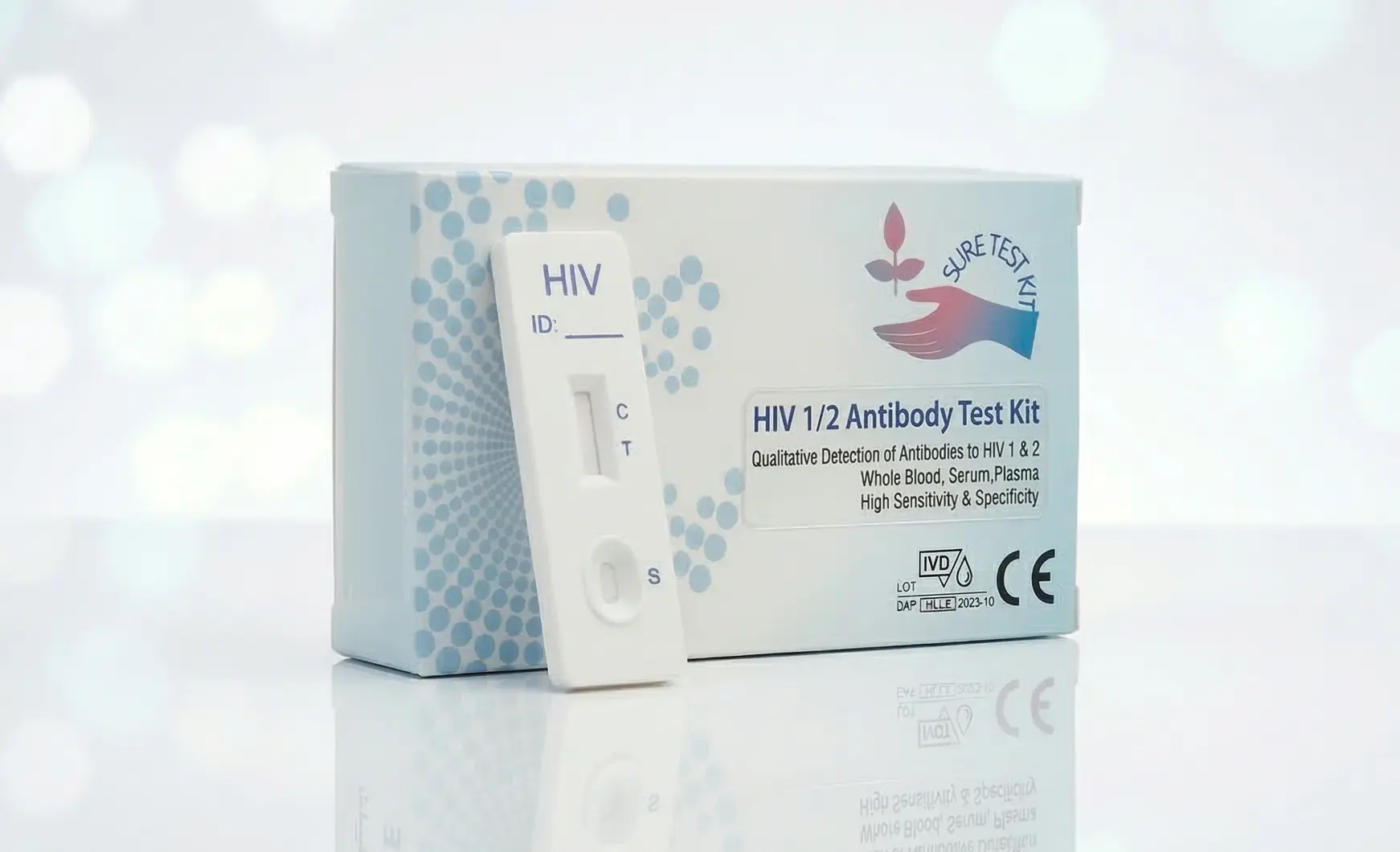
The HIV-1/2 Antibody Test Kit is a self-use screening product designed for simple and private antibo...
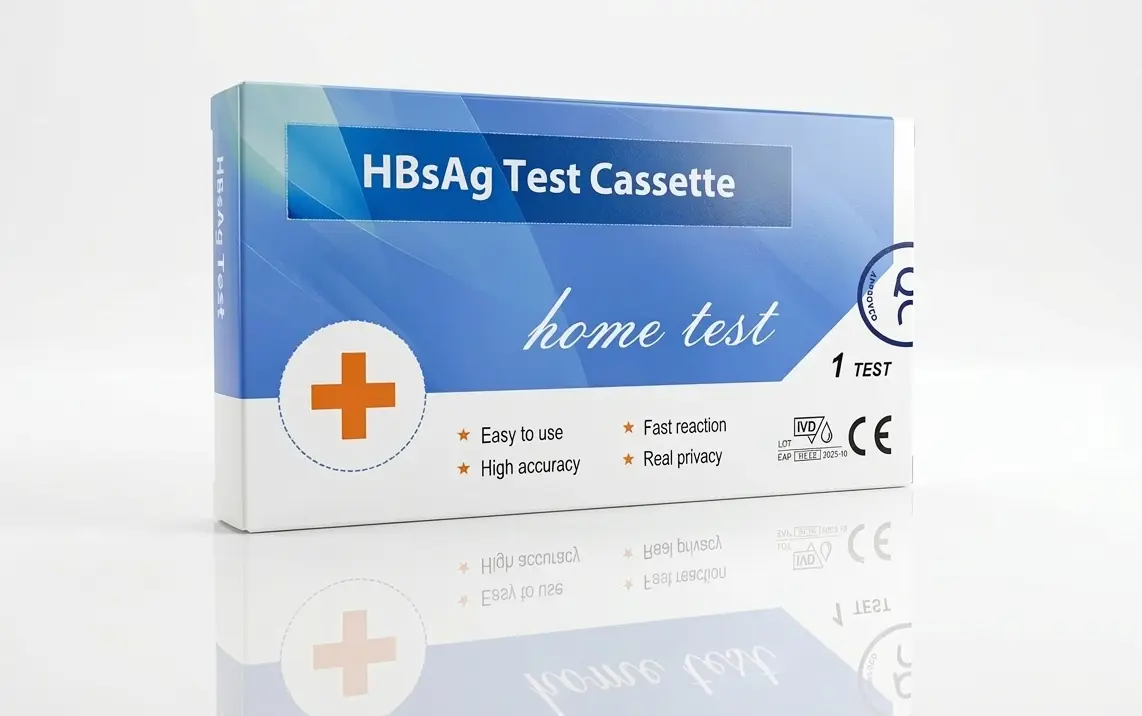
The Hepatitis B Self Test Kit is an at-home screening tool designed to help detect the presence of H...
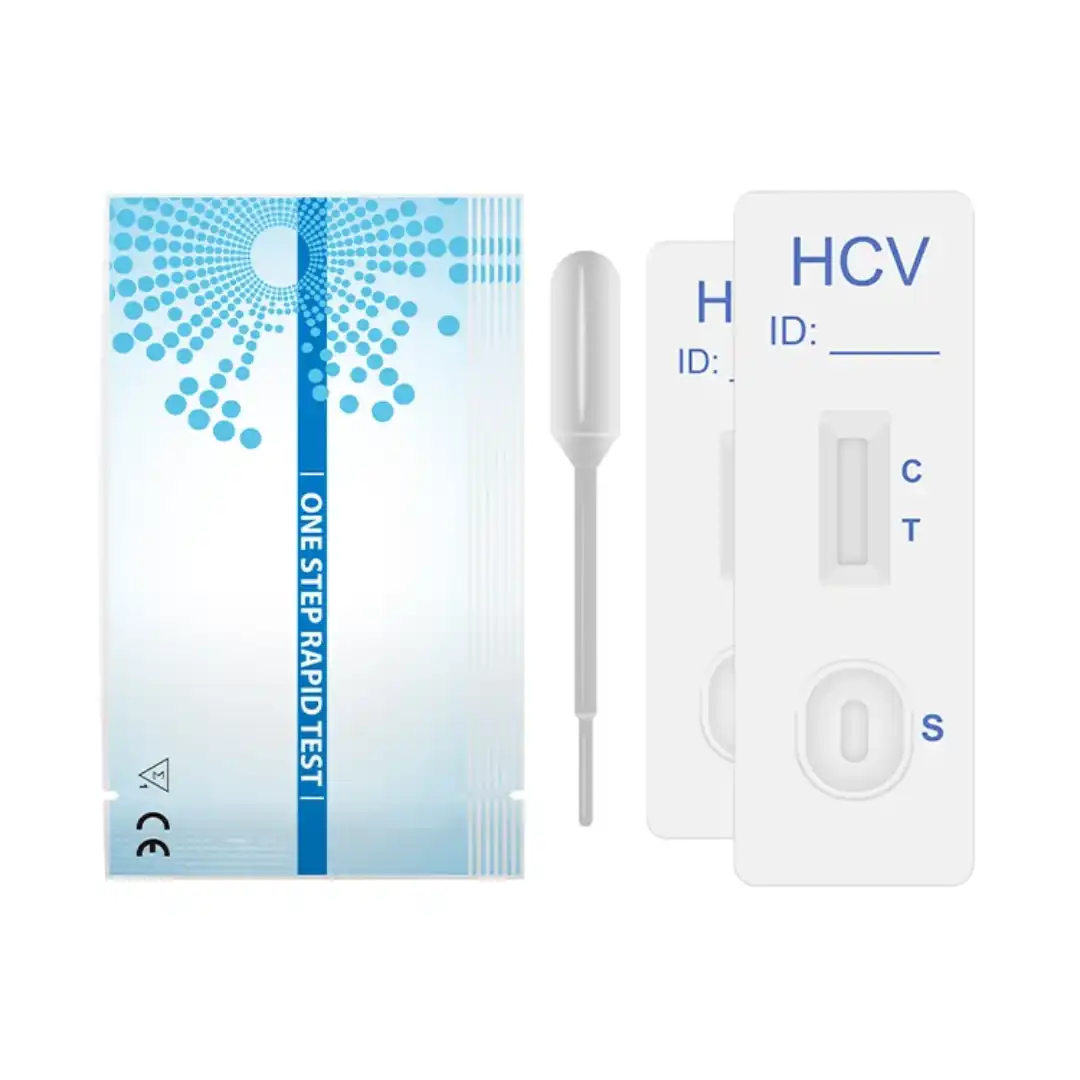
The Hepatitis C Test Kit is a screening product designed to detect antibodies to the Hepatitis C vir...
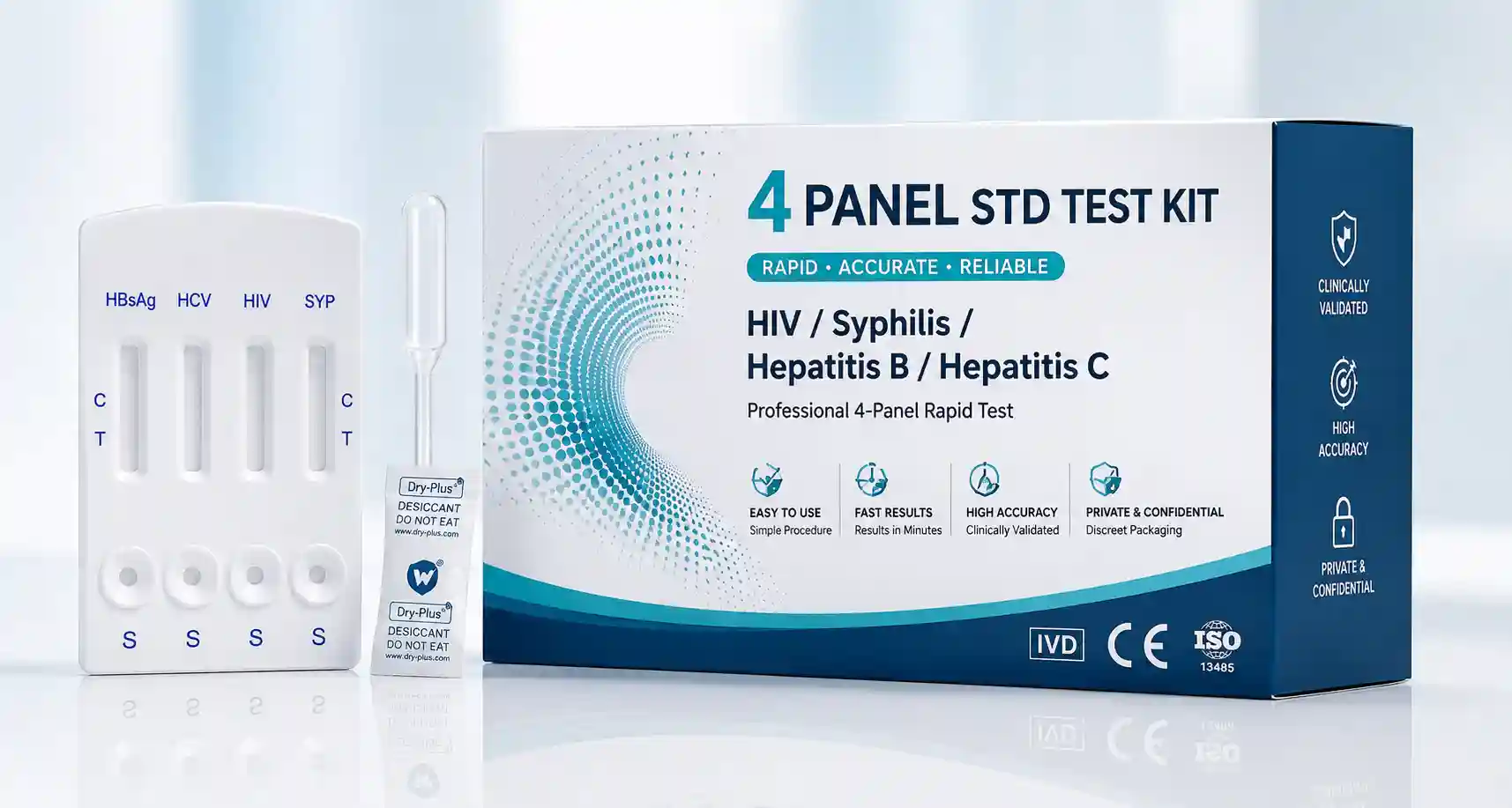
The 4 Panel STD Test Kit is a multi-analyte screening product designed to detect markers related to ...
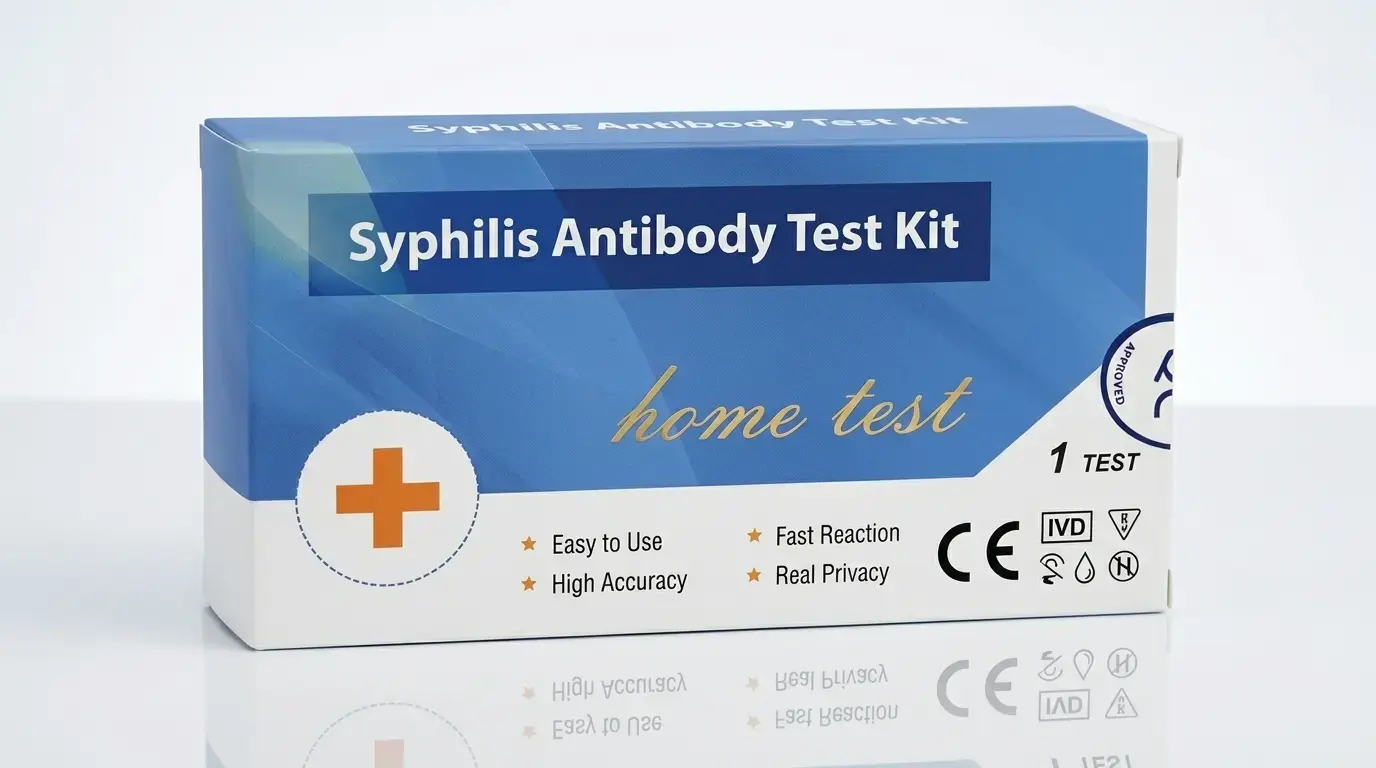
The Syphilis Test Kit is a screening product designed to detect antibodies related to Treponema pall...
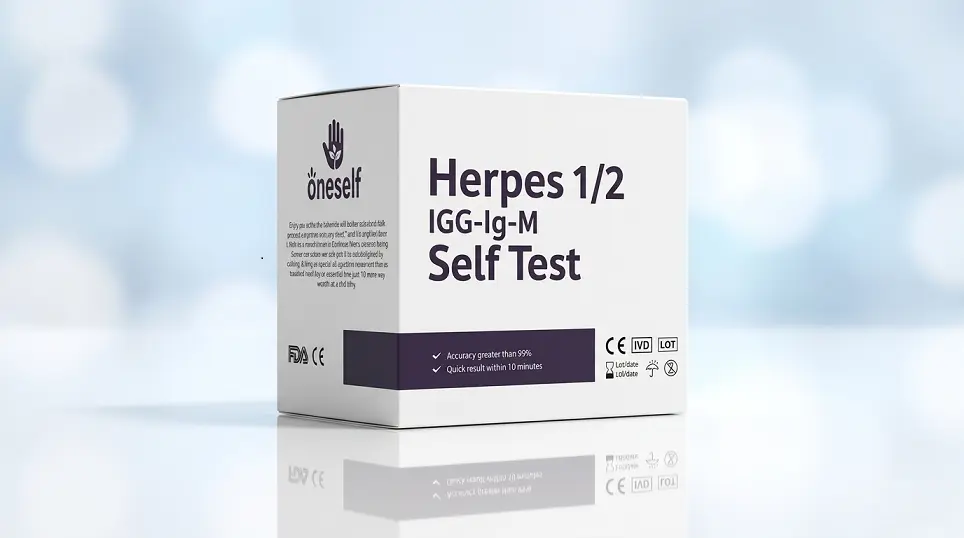
The Herpes 1/2 IgG & IgM Test Kit is designed for the qualitative detection of IgG and IgM a...
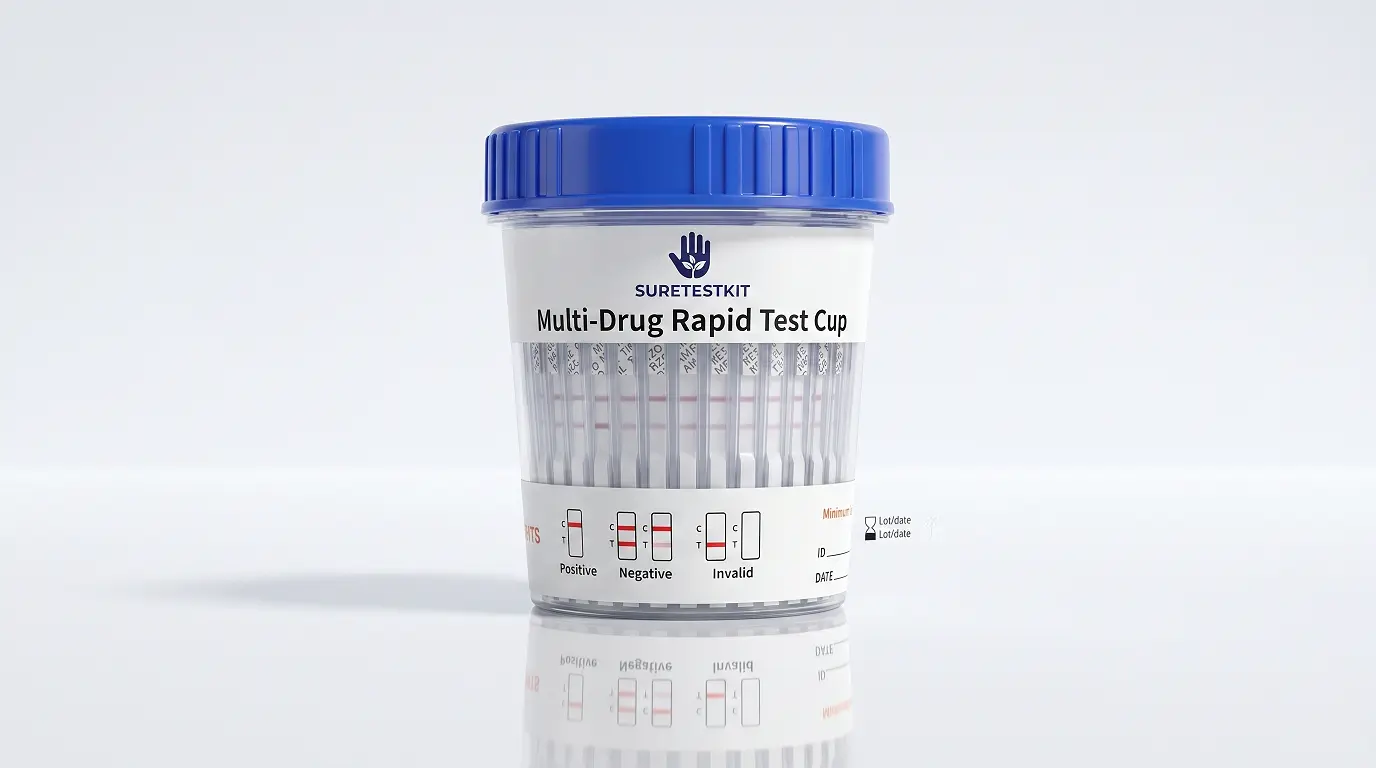
The 18 Panel Drugs Test Cup is a convenient, all-in-one screening solution designed for fast and cle...
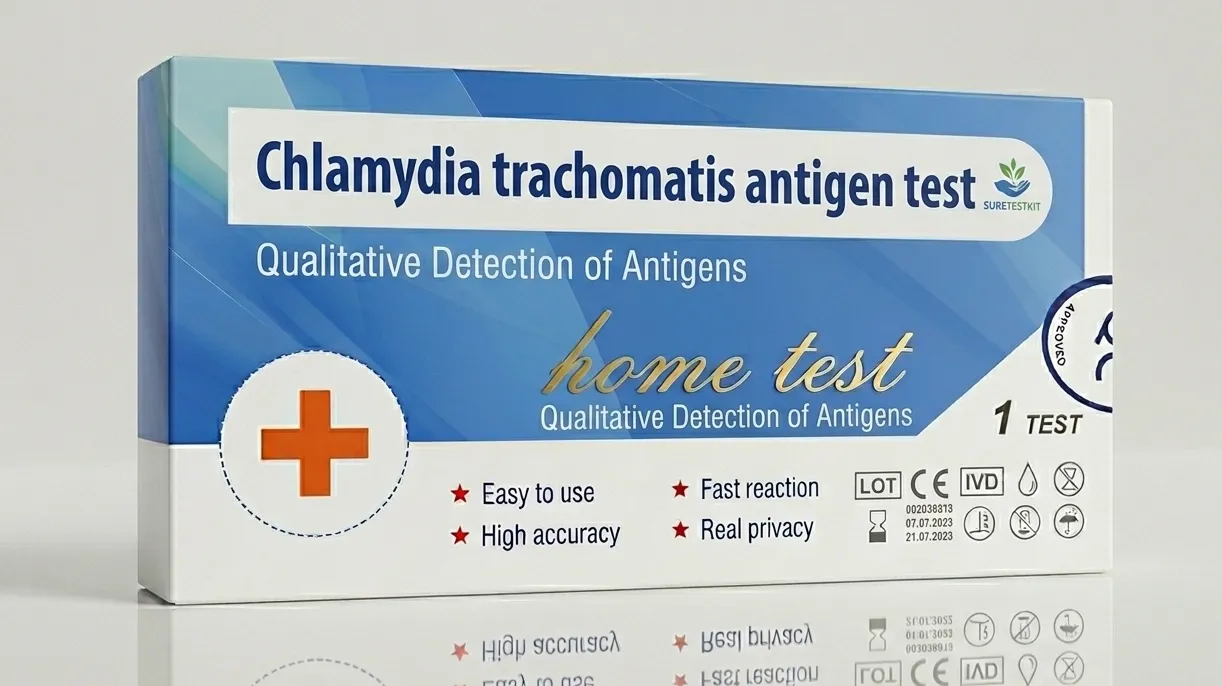
The Chlamydia Test Kit is designed to support fast and discreet screening for chlamydia through a si...
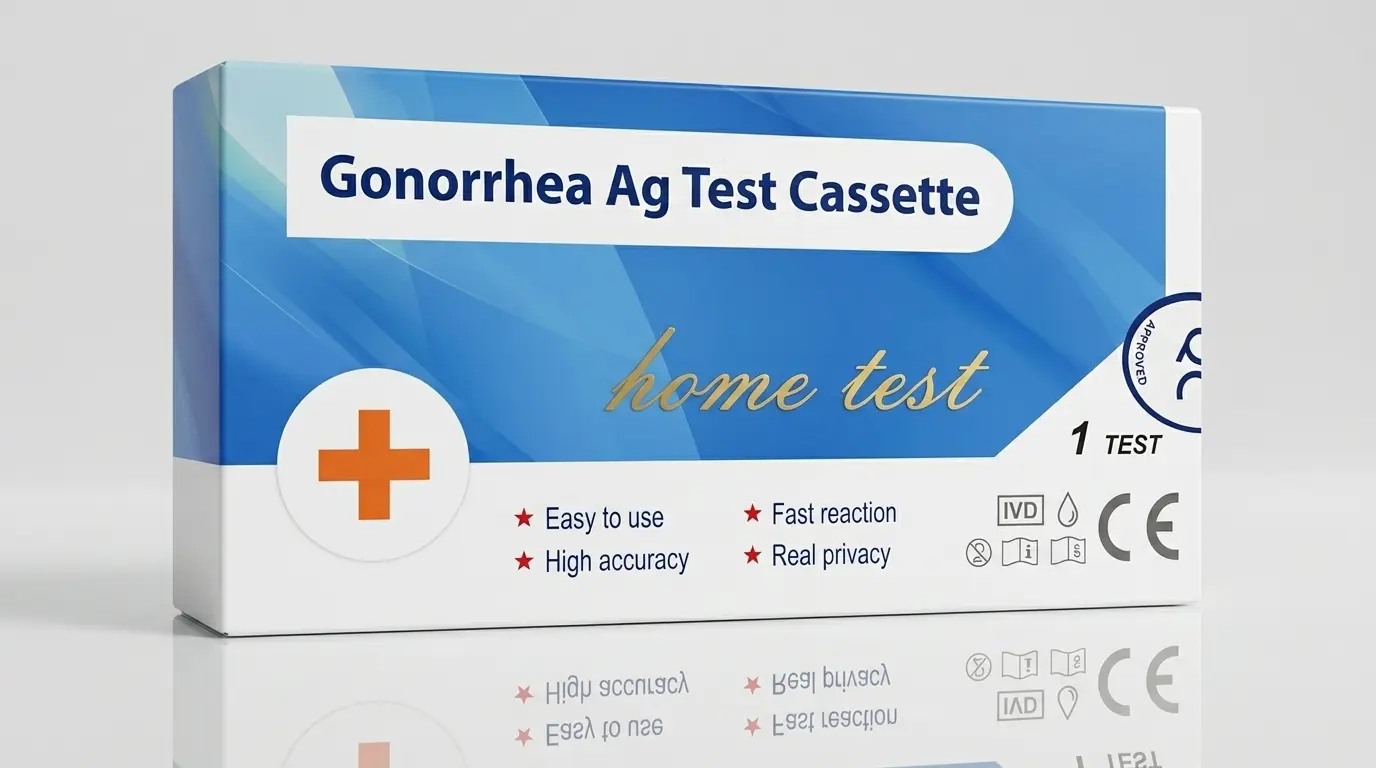
The Gonorrhea Test Kit is designed for convenient and discreet screening of gonorrhea using a straig...
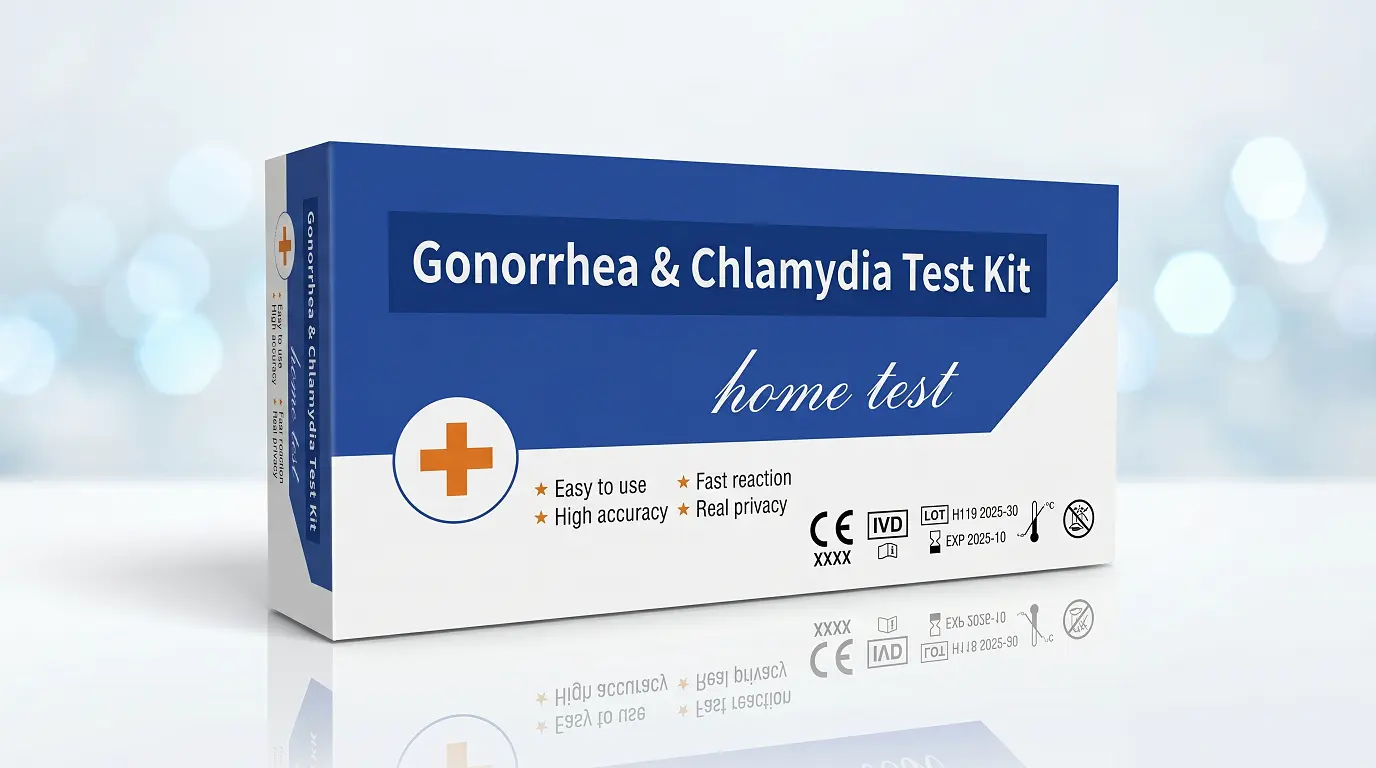
The Gonorrhea & Chlamydia Test Kit is designed for convenient and discreet screening of two ...
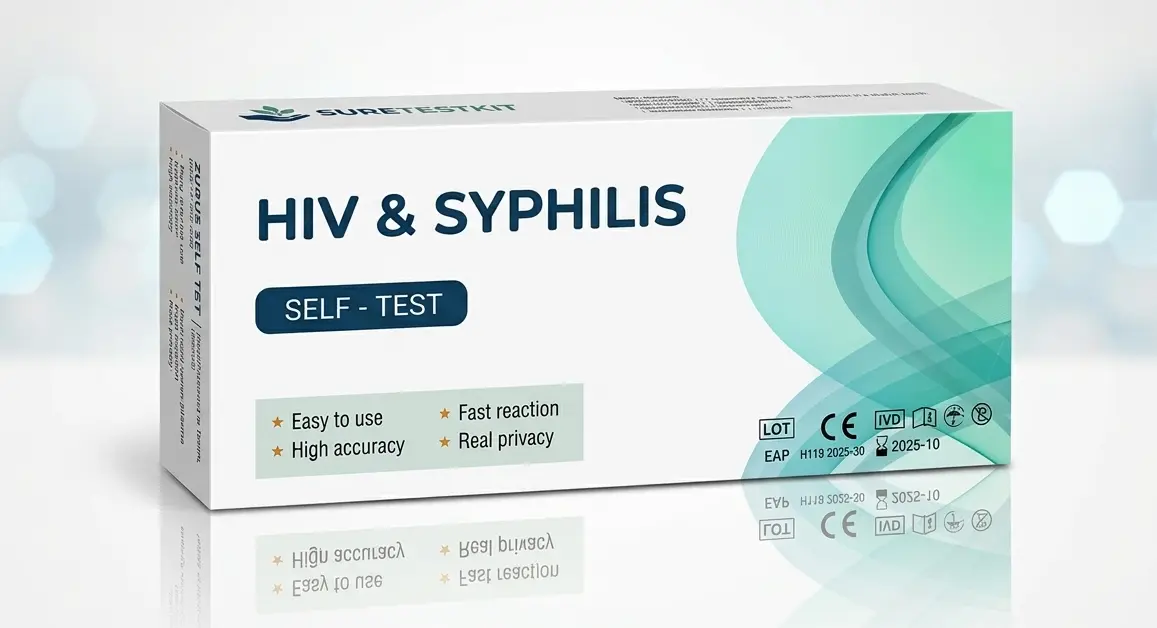
The HIV & Syphilis Test Kit is designed for quick and simple dual screening using the kits. ...
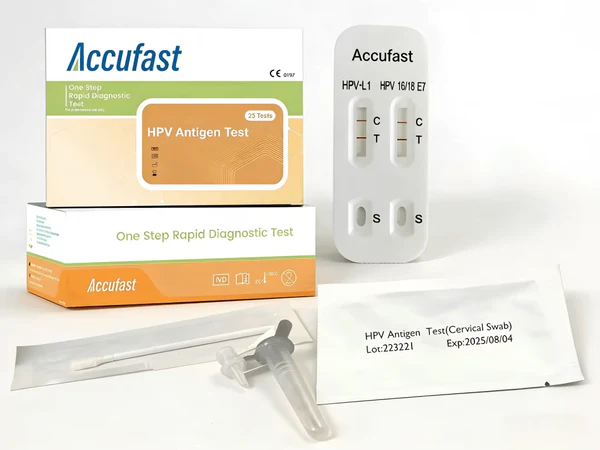
Why Choose the Dual-Detection HPV Kit? Not all HPV tests are equal. Our advanced cassette uses Dual ...
Take Absolute Control of Your Sexual Health with Clinical PrecisionIn a world where health and priva...
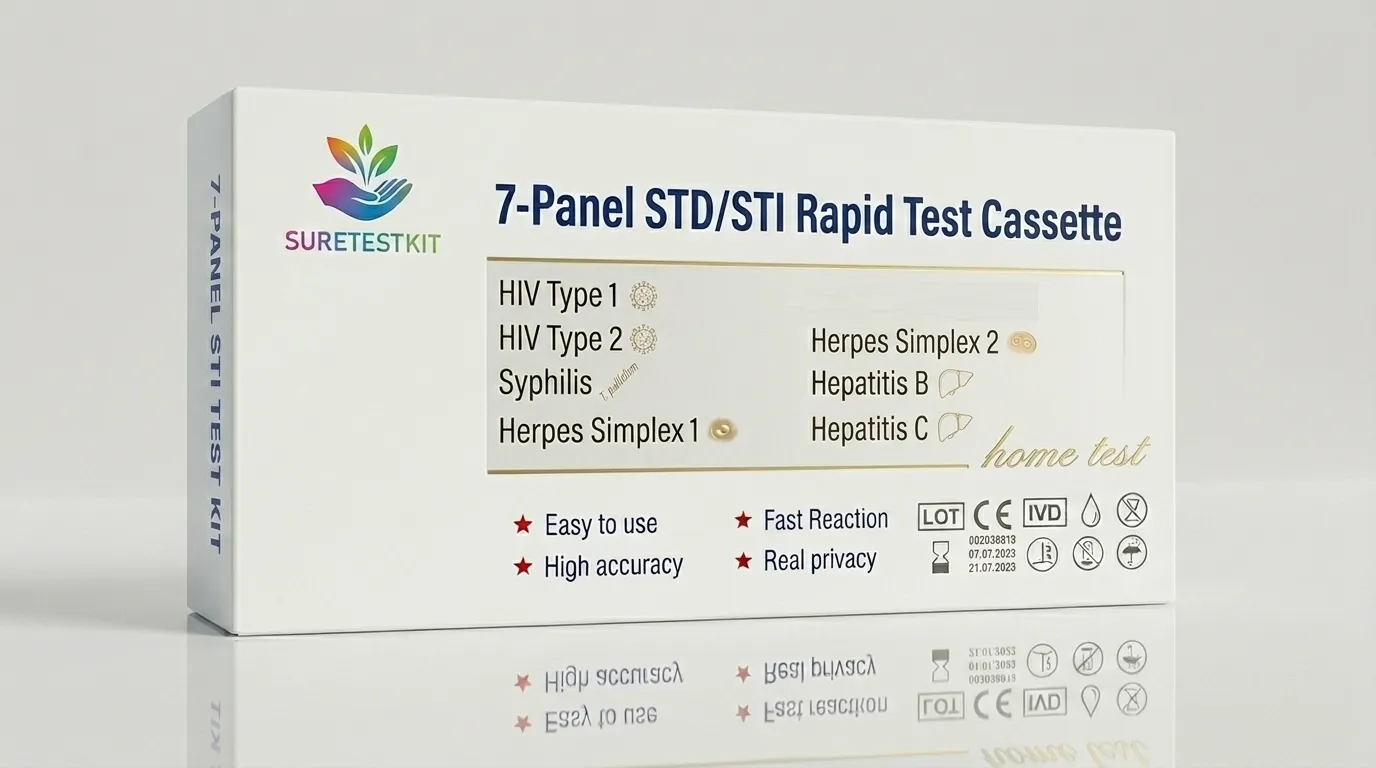
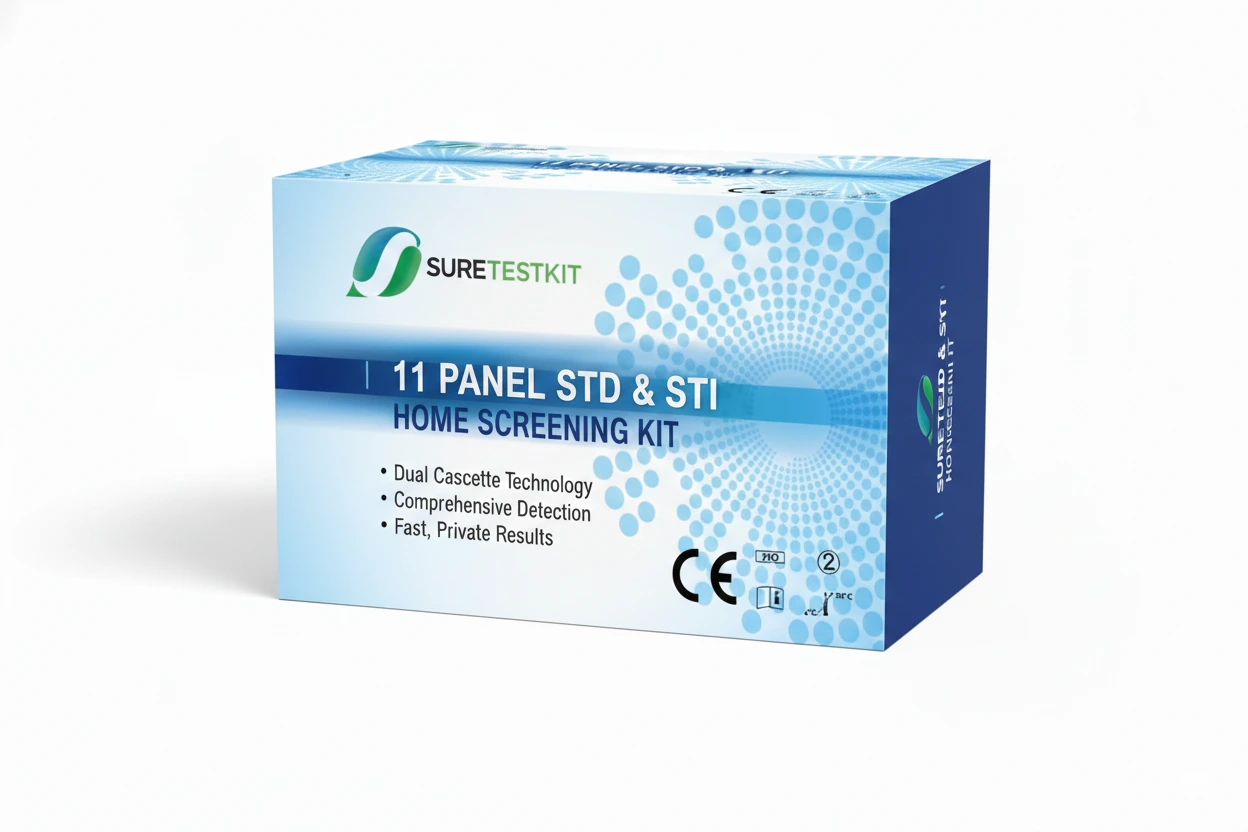
The Most Advanced At-Home Diagnostic Panel in the UAEWhen it comes to your sexual health, partial an...
Your health and privacy are our top priorities.
All conversations and orders are strictly confidential and delivered in discreet packaging.
We believe your health is your most personal asset. SureTestKit provides a bridge between professional clinical accuracy and the absolute comfort of your own home, ensuring you never have to compromise between knowing your status and keeping your business private.
Our kits are globally recognized with **FDA and CE certifications**. Every panel is rigorously tested to provide laboratory-grade results for HIV, Syphilis, Herpes, and Hepatitis, matching the accuracy levels of traditional clinic visits.
We guarantee **100% anonymity**. Your order arrives in a plain courier bag with no mention of "SureTestKit," "HIV," or "Test Kit" on the outer label. Your privacy is protected from the moment you click "order" to the final delivery.
No needles, no complex lab work, and no waiting weeks for results. Our kits are designed for home use with easy-to-follow instructions. Get clear, visual results in as little as **15 minutes** with a simple finger-prick sample.
Operating directly from our UAE hubs, we offer **Same-Day or Next-Day delivery**. Whether you are in a Dubai apartment or a villa in Fujairah, our specialized logistics team ensures your package reaches you safely and swiftly.
Buy confidential HIV and STD self test kits online with same-day delivery in Dubai and Sharjah, plus next-day delivery across Abu Dhabi, Ajman, Ras Al Khaimah, Fujairah, Umm Al Quwain and all UAE emirates. Every order is packed discreetly for complete customer privacy.
Same Day Delivery
Next Day Delivery
Confidential Service
SureTestKit provides confidential HIV test kits, STD self test kits, rapid screening kits, gonorrhea test kits, chlamydia test kits, hepatitis screening kits and private at-home test kits across Dubai, Abu Dhabi, Sharjah, Ajman, Fujairah, Ras Al Khaimah and Umm Al Quwain with fast UAE-wide delivery service.
Read Full Shipping PolicyMost infections are asymptomatic in their early stages, meaning you can feel perfectly healthy while being a carrier. Early detection through discreet, professional testing is the gold standard for your long-term health and complete peace of mind.
Early HIV symptoms, known as Acute Retroviral Syndrome, typically appear 2-4 weeks after exposure. Look for **persistent high fever, night sweats, and significant swelling of the lymph nodes** in the neck or armpits. Other signs include a non-itchy red rash on the torso, unexplained mouth ulcers, and severe fatigue that mimics a heavy flu.
Systemic red flags include **unusual genital discharge (changes in color, consistency, or odor)** and dysuria (burning/stinging during urination). Be vigilant for pelvic pain, discomfort during intimacy, or the appearance of localized skin changes like small bumps or redness. Many infections remain silent for months while causing internal inflammation.
Outbreaks often begin with a "prodromal" phase: **tingling, itching, or a burning sensation** in the affected area. This is followed by the appearance of small, fluid-filled blisters that can be very painful. During initial outbreaks, you may also experience shooting neuralgic pain in the lower body, headaches, and general body aches.
Known as the "silent" infection because up to 75% of cases show zero symptoms. When they do occur, symptoms include **unexplained bleeding between periods, lower abdominal discomfort, or pain in the testicles**. If left untreated, the bacteria can lead to Pelvic Inflammatory Disease (PID) and long-term fertility complications.
Symptoms usually manifest rapidly within 2–7 days. Key indicators include a **thick, purulent discharge (yellow, green, or cloudy)** and acute sharp pain during urination. It can also cause severe throat infections if transmitted orally, or localized swelling and redness at the urethra opening. Early screening prevents the spread to other organs.
Syphilis progresses in distinct stages. The primary stage is a **chancre (a firm, round, painless sore)** at the infection site. The secondary stage features a non-itchy rash on the trunk, palms, or soles of the feet, alongside patchy hair loss and fever. Without detection, it enters a latent stage that can eventually damage the heart and brain.
Find answers about HIV and STD self test kits, confidential delivery, test accuracy, same-day shipping in Dubai and Sharjah, and private at-home screening across the UAE.
Expert-led sexual health education and HIV awareness tailored for the UAE community.
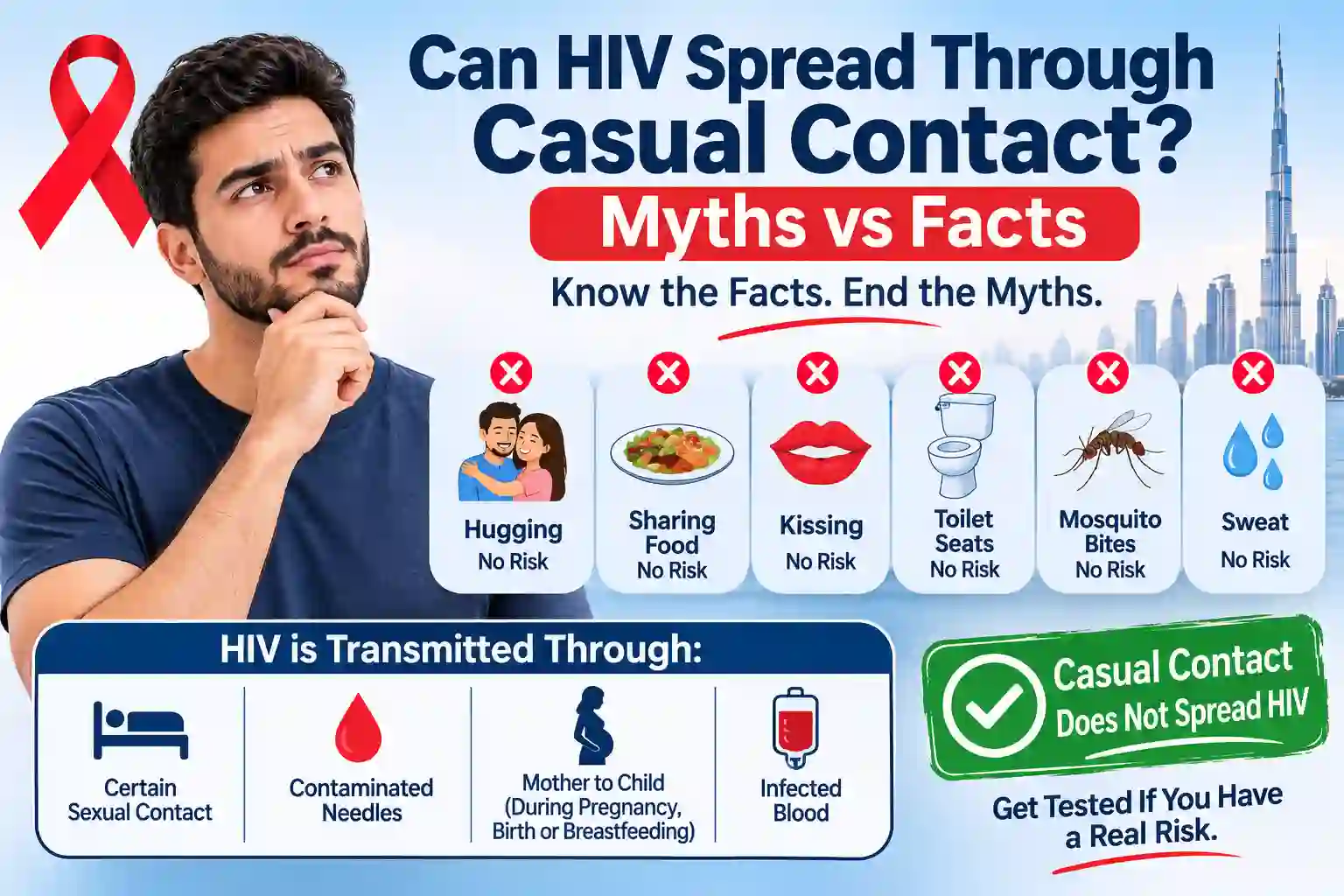
HIV is one of the most misunderstood infections, and misinformation can create unnecessary fear, stigma, and anxiety. Many people still worry about whether HIV can spread through hugging, sharing food, using the same toilet, shaking hands, or sitting next to someone who is living with HIV.Understanding how HIV actually spreads is important for protecting your health while treating other people with dignity and respect.If you are searching for answers in Dubai, Sharjah, Abu Dhabi, or anywhere in the UAE, this guide explains what situations do and do not transmit HIV, when testing is necessary, and why understanding the facts matters.1. Can HIV spread through casual contact?No. HIV does not spread through ordinary casual contact.You cannot get HIV simply by sharing everyday spaces, touching someone, or being around a person who has HIV.HIV is transmitted through specific body fluids under particular circumstances. The main transmission routes include certain sexual exposures, sharing contaminated needles or injecting equipment, and transmission during pregnancy, childbirth, or breastfeeding.HIV is not transmitted through normal social interaction.This means you can safely work, study, eat, exercise, and live alongside someone with HIV without fear of acquiring the virus through casual contact.2. Can HIV spread through hugging or shaking hands?No. Hugging, shaking hands, holding hands, and ordinary physical contact do not transmit HIV.HIV cannot pass through healthy, unbroken skin. Touching someone's skin, sitting next to them, or greeting them normally is not an HIV exposure.There is no reason to avoid a colleague, friend, family member, or other person because they are living with HIV.Fear of casual contact is based on misinformation, not the way HIV spreads.3. Can HIV spread through kissing?HIV does not spread through saliva or ordinary kissing.Closed-mouth kissing and social kissing carry no HIV transmission risk. Deep kissing is also considered extremely low risk; extremely rare cases have involved blood exposure, such as when both people had bleeding gums or open sores and infected blood entered the other person's bloodstream.HIV is not transmitted through saliva alone.You do not need to worry about sharing affection, greeting someone with a kiss, or normal social interaction.4. Can HIV spread by sharing food, drinks or utensils?No. HIV cannot be transmitted by sharing:Food prepared by someone living with HIVPlates, spoons, forks or other utensilsDrinking glasses or cupsWater bottles during normal useMeals at restaurantsFood at home with family or friendsHIV does not survive or spread in food in a way that causes infection through ordinary eating.Sharing a meal with someone living with HIV is safe.5. Can HIV spread through toilet seats or bathrooms?No. HIV cannot spread through toilet seats, bathroom surfaces, taps, showers, or ordinary shared bathroom facilities.You can safely use the same toilet, bathroom, swimming pool, gym facilities, or other shared spaces as someone living with HIV.HIV is not spread through water or environmental surfaces in ordinary daily situations.6. Can mosquitoes transmit HIV?No. Mosquitoes do not transmit HIV.Even in places where mosquitoes are common, they do not spread HIV from one person to another. HIV does not reproduce inside mosquitoes in the way necessary for mosquito-borne transmission.Mosquito bites are not considered a route of HIV transmission.7. Can HIV spread through sweat, tears or saliva?No. Sweat, tears, and saliva do not transmit HIV under normal circumstances.HIV is not spread through:SweatingSneezingCoughingTearsSalivaSharing towels during ordinary useTouching surfaces contaminated with these fluidsThe exception to consider is visible blood contamination. If blood is involved and enters damaged skin or a mucous membrane, the situation may require medical assessment depending on the exposure.8. What situations can actually transmit HIV?HIV transmission occurs when certain infectious body fluids enter the body through mucous membranes, damaged tissue, or direct bloodstream exposure.Potential transmission routes include:Sexual exposureAnal or vaginal sex can transmit HIV when prevention measures are not used and the virus is present at a transmissible level. Risk varies depending on the type of exposure and other factors.Sharing needles or injecting equipmentSharing contaminated needles, syringes, or other injecting equipment can expose someone directly to infected blood.Blood exposureContact with infected blood through an injury, contaminated equipment, or certain unsafe procedures may create a risk.Pregnancy, childbirth and breastfeedingHIV can be transmitted from mother to child during pregnancy, childbirth, or breastfeeding. Medical treatment significantly reduces the risk of transmission.HIV is preventable, and effective treatment allows people living with HIV to maintain their health and prevent sexual transmission when they achieve and maintain an undetectable viral load.9. Do you need an HIV test after casual contact?If your only contact was hugging, shaking hands, sharing food, using the same toilet, kissing socially, or being around someone who has HIV, that contact alone is not a reason for HIV testing.Testing may be appropriate if you have had a genuine possible exposure, such as unprotected anal or vaginal sex, shared injecting equipment, or a blood exposure that requires evaluation.If you are uncertain whether a particular situation involved an exposure, a qualified healthcare professional can help assess it.If a possible exposure occurred within the last 72 hours, seek urgent medical care to assess whether post-exposure prophylaxis (PEP) is appropriate. PEP is time-sensitive and should be started as soon as possible when indicated.10. Why HIV testing is importantAlthough HIV does not spread through casual contact, it can spread through exposures that may not be obvious to a person.Testing helps you know your HIV status rather than relying on symptoms, assumptions, or a partner's appearance.Some people with HIV may not have noticeable symptoms for years. That is why testing is important after a potential exposure and as part of routine screening when recommended.If you are considering home screening, understand your test's detection window, sample requirements, and result interpretation.You can explore HIV screening options through SureTestKit HIV test kits.Related options include:HIV 4th Generation Test KitHIV 1/2 Antibody Test KitA home self-test is a screening tool. Reactive results need confirmatory testing, and a negative result taken during the window period may require repeat testing.Frequently Asked QuestionsCan HIV spread by sharing a glass of water?No. Sharing glasses, cups, water bottles, or drinking water does not transmit HIV through ordinary contact.Can HIV spread by sitting beside an HIV-positive person?No. Sitting beside someone, sharing a chair, working together, or being in the same room cannot transmit HIV.Can HIV spread through sweat?No. Sweat alone does not transmit HIV.Can HIV spread from mosquito bites?No. Mosquitoes and other insects do not transmit HIV.Can I live with someone who has HIV?Yes. You can safely share a home, meals, bathrooms, furniture, and everyday activities. HIV does not spread through household casual contact.Should I get tested after kissing?Ordinary kissing, including closed-mouth and social kissing, is not an HIV transmission route. Deep kissing is an extremely rare concern only in unusual situations involving blood exposure. If there was no blood exposure or other risk, kissing alone does not warrant HIV testing.ConclusionHIV cannot spread through ordinary everyday contact. Hugging, shaking hands, sharing food, using the same toilet, kissing socially, sharing a workplace, or being bitten by a mosquito do not transmit HIV.Understanding these facts helps prevent unnecessary fear and stigma toward people living with HIV.If you have experienced a genuine possible exposure, focus on the appropriate medical steps and testing timeline rather than worrying about casual contact.Know the facts. Protect your health. Treat everyone with respect.Explore HIV screening information and test options at SureTestKit UAE.This article is for educational purposes only and is not a substitute for professional medical advice.
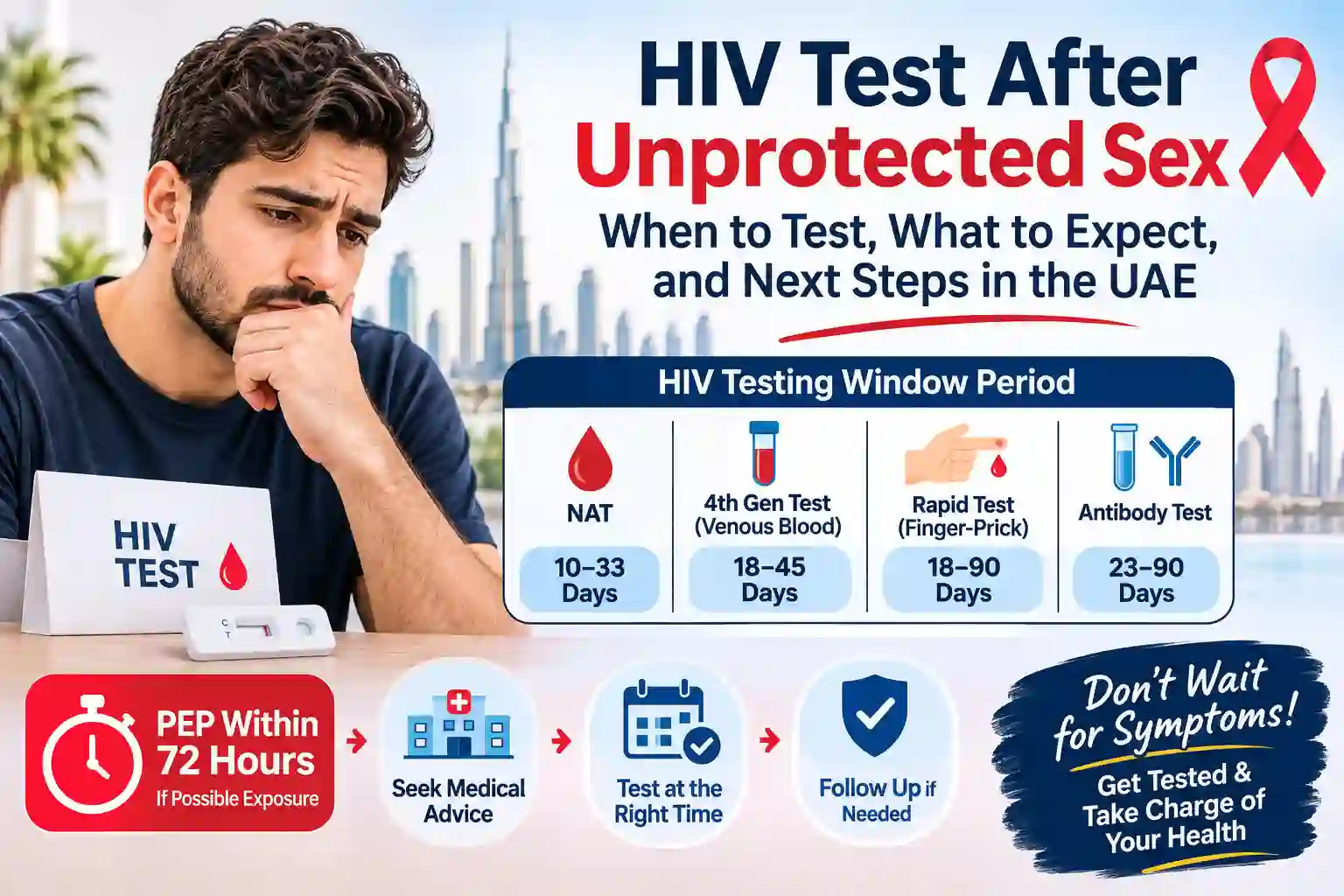
Having unprotected sex can leave you feeling worried about your sexual health, especially if you are uncertain about your partner's HIV status. Many people immediately start searching questions such as: When should I take an HIV test? Can I test the next day? Will an early test give an accurate result?If you are in Dubai, Abu Dhabi, Sharjah, or anywhere across the UAE, understanding the right testing timeline can help you make informed decisions instead of relying on anxiety, symptoms, or guesswork.This guide explains when to take an HIV test after unprotected sex, what different tests can detect, when repeat testing may be needed, and what steps to take after a possible exposure.1. When should you take an HIV test after unprotected sex?The timing of your HIV test matters because HIV cannot be detected immediately after exposure. Every test has a window period, which is the time between a possible exposure and when that particular test can reliably detect infection.Testing too early may produce a negative result even if an infection has occurred.The appropriate testing date depends on the test type:Nucleic acid test (NAT): Usually detects HIV approximately 10–33 days after exposure.Laboratory fourth-generation antigen/antibody test using venous blood: Usually detects HIV approximately 18–45 days after exposure.Rapid antigen/antibody test using finger-prick blood: Approximately 18–90 days.Antibody tests, including most HIV self-tests: Approximately 23–90 days.These are general detection windows published by the CDC. The window period for your specific test may differ, so always check the manufacturer's instructions and consult a healthcare professional.If you take a test before the end of its window period and receive a negative result, repeat testing may be necessary.2. What should you do within the first 72 hours?If you think you may have been exposed to HIV during unprotected sex, do not wait for symptoms or a home test.Seek urgent medical attention if the exposure occurred within the last 72 hours. A healthcare professional can assess whether you are eligible for HIV post-exposure prophylaxis (PEP).PEP is a course of medication used after a potential HIV exposure to reduce the risk of infection. It should be started as soon as possible when indicated, ideally within 24 hours and no later than 72 hours.Important points to remember:PEP is time-sensitive.Do not delay medical care while searching for or taking a home test.PEP is generally taken for 28 days when prescribed.Your healthcare provider will guide you regarding initial and follow-up HIV testing.If your exposure was recent, medical assessment is more urgent than waiting for a test to become detectable.3. Can an HIV test be negative one day after unprotected sex?Yes, an HIV test taken one day after possible exposure may be negative, but it cannot rule out infection from that exposure.This is because the virus or the markers detected by the test may not yet be present at detectable levels.An early negative test may help establish a baseline HIV status, but it is not proof that transmission did not occur during the recent event.This is why testing should be planned according to the specific test's window period rather than simply choosing the earliest possible day.4. HIV 4th-generation test vs HIV self-test after exposureDifferent HIV tests detect different markers and have different detection windows.HIV 4th-generation laboratory testA laboratory fourth-generation HIV test detects both HIV antibodies and the p24 antigen. A laboratory test using venous blood typically has a detection window of 18–45 days.It is often used in clinical screening because it can detect HIV earlier than antibody-only tests.HIV antibody self-testMost HIV self-tests detect antibodies produced by the immune system in response to HIV.They may be convenient for home screening, but antibody tests generally have a longer window period. The CDC gives a typical window of 23–90 days for antibody tests.The exact timing depends on the test, sample type, and instructions.If you are choosing a home test after a possible exposure, don't select a product based only on the number of days advertised. Confirm whether it detects antibodies alone or antigen and antibodies together.5. What if you have no HIV symptoms after unprotected sex?The absence of symptoms does not mean you are HIV-negative.Some people develop flu-like symptoms during early HIV infection, such as:FeverSore throatFatigueRashSwollen lymph nodesMuscle achesOthers may experience no symptoms at all.These symptoms are also associated with many common illnesses, so they cannot diagnose HIV. Similarly, feeling completely normal does not rule it out.Testing at the appropriate time is the reliable way to establish your HIV status.6. When should you repeat your HIV test?Repeat testing may be recommended if:Your initial test was taken during the window period.You had another possible exposure after your first test.You used a test with a longer detection window.You are taking PEP or PrEP.Your healthcare professional recommends follow-up based on your exposure.For example, if you take an antibody self-test early and it is negative, you may still need to repeat the test after the full window period specified for that product.Do not assume that a negative result from one test type automatically applies to another test type.7. Can you use an HIV self-test at home after unprotected sex?Yes, a home HIV self-test can be an option for screening, provided it is suitable for your circumstances and you use it according to the instructions.Before using one, check:The type of test and what it detects.The sample required.The recommended testing window.How to interpret negative, reactive, or invalid results.Whether follow-up testing is recommended.A negative result taken within the window period may require repeat testing. A reactive result requires confirmation through appropriate professional testing.You can explore available HIV screening options through the SureTestKit HIV test kit collection.You may also review:HIV 4th-generation test kitHIV 1/2 antibody test kitRead the specifications carefully before choosing a test.8. What should you do after a reactive HIV self-test result?A reactive self-test is a screening result, not a confirmed diagnosis.If your test is reactive:Avoid panicking or assuming the result confirms HIV.Arrange follow-up testing with a qualified healthcare provider.Follow the recommended confirmatory testing pathway.Seek professional guidance regarding your next steps.If your test is invalid, follow the kit's instructions for repeating the test or seek testing from a healthcare provider.If your test is negative, check whether it was taken after the relevant window period and whether additional testing is recommended.9. HIV testing after unprotected sex in Dubai, Abu Dhabi and SharjahIf you are living in Dubai, Sharjah, Abu Dhabi or another emirate, you can seek HIV testing through a healthcare provider or appropriate testing service.Some people prefer laboratory testing and professional guidance, while others may consider home self-testing for initial screening.Whichever option you choose, the most important factors are:Appropriate test selectionCorrect timingFollowing test instructionsRepeat testing when neededProfessional follow-up for reactive resultsHIV testing is a normal part of healthcare. Seeking information and getting tested when appropriate is a responsible step toward protecting your health.Frequently Asked QuestionsCan I test for HIV 3 days after unprotected sex?You may be able to take certain tests, but a negative result at three days cannot rule out infection from that exposure. If the exposure occurred within 72 hours, seek urgent medical assessment for possible PEP.Is an HIV test accurate after 14 days?Some tests may detect HIV at this stage, but a negative result at 14 days is too early to rule out infection with many test types. Follow the detection window for the specific test and arrange repeat testing as recommended.Is a fourth-generation HIV test accurate after 28 days?A laboratory fourth-generation test can detect many infections by 28 days, but 28 days is still within its typical 18–45-day window. Follow-up testing after the full window period may be advised.Can an HIV self-test detect infection after one month?Some infections may be detected, but most antibody self-tests have a window period extending up to 90 days. A negative result after one month may require repeat testing.Should I take an HIV test even if my partner has no symptoms?Yes, symptoms are not a reliable way to determine HIV status. Testing decisions should be based on exposure, test timing, and professional advice rather than appearance or symptoms.What is the most important thing to do after unprotected sex?If a possible exposure happened within the last 72 hours, seek urgent medical care to assess whether PEP is appropriate. After that, follow a testing schedule based on the type of HIV test and the healthcare professional's recommendations.ConclusionAfter unprotected sex, the most important thing is not to panic or rush into interpreting an early test result. Understand the window period, seek urgent care if PEP may be needed, and choose the right testing timeline.A negative result taken too early may not rule out HIV, while a reactive self-test needs professional confirmation.If you are in Dubai, Abu Dhabi, Sharjah, or anywhere in the UAE, making informed decisions about HIV testing is a positive step toward your sexual health and wellbeing.Explore HIV screening options: SureTestKit UAEThis article is for educational purposes only and does not replace medical advice, diagnosis, or treatment from a qualified healthcare professional.
Read More
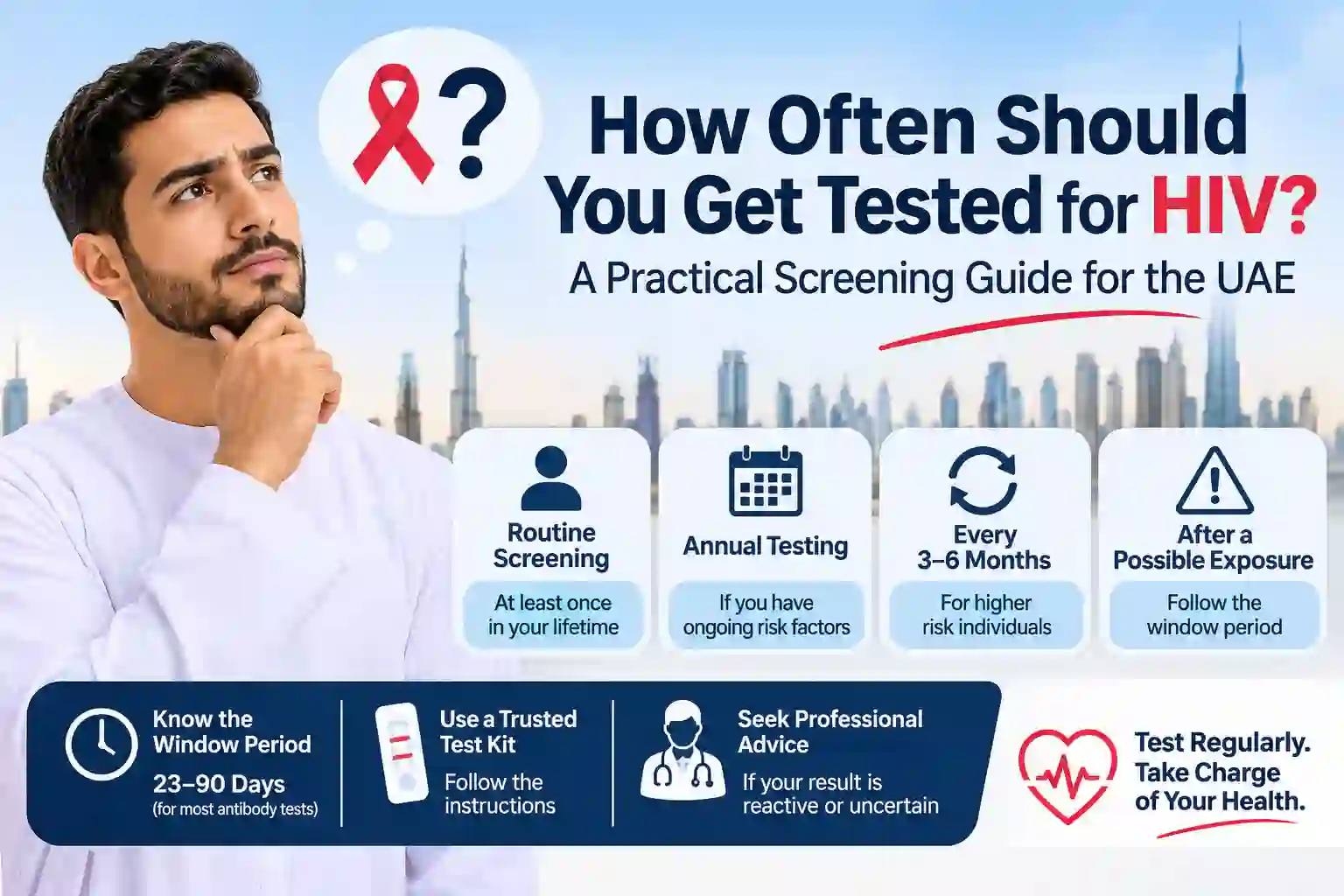
Knowing when to take an HIV test is an important part of looking after your health. Some people may only need routine screening, while others may benefit from testing more frequently because of ongoing or recent exposure risks.If you live in Dubai, Sharjah, Abu Dhabi or another emirate, you may be wondering: How often should I get tested for HIV? Should you test every few months, once a year, or only after a possible exposure?The answer depends on your circumstances, the type of test you use, and whether there has been a recent or ongoing possibility of exposure. This guide explains the general screening principles, when repeat testing may be appropriate, and how HIV self-test kits can fit into a responsible testing routine.Important: This article is educational and is not a substitute for medical advice. For personal testing intervals, speak with a qualified healthcare professional.1. How often should you get tested for HIV?There is no single testing schedule that is right for everyone. Your recommended frequency depends on factors such as your previous test results, possible exposures, sexual health history, and whether you use HIV prevention medication.As a general reference, the US Centers for Disease Control and Prevention (CDC) recommends that everyone aged 13–64 get tested at least once as part of routine healthcare. It also recommends more frequent testing for people with certain ongoing risk factors. These are general public-health recommendations, not a statement of UAE-specific legal requirements.A practical overview is:Never tested before: Consider arranging a routine HIV test with a healthcare provider.No new possible exposure and no ongoing risk factors: You may not need frequent repeat testing after an appropriate negative test.Ongoing exposure risks: Regular testing may be appropriate, often at least annually.Higher or continuing risk: A healthcare professional may recommend testing every 3–6 months, depending on your circumstances.Recent possible exposure: Test at an appropriate time, but understand that an early negative result may need to be repeated after the test's window period.The CDC describes annual testing for people with certain risk factors and notes that some sexually active people may benefit from testing every 3–6 months. The right schedule should be based on individual circumstances.2. Who may need more frequent HIV testing?More frequent screening may be appropriate if you have had a possible exposure since your last test or if your circumstances involve ongoing risk.You should discuss a testing schedule with a healthcare professional if:You have had sex with someone whose HIV status is positive or unknown.You have had new or multiple sexual partners since your last test.You have shared needles, syringes or other injecting equipment.You have been diagnosed with another sexually transmitted infection (STI).You are taking HIV pre-exposure prophylaxis (PrEP).A healthcare professional has advised repeat testing based on your medical or exposure history.These examples are not a diagnosis or a judgement about anyone's lifestyle. HIV testing is a routine health measure, and deciding to test is a responsible way to understand your health status.3. Should you get tested after every possible exposure?A possible exposure does not always mean HIV transmission has occurred. However, if you think you may have been exposed, it is important to act promptly.Do not wait for symptoms. HIV cannot be reliably identified by how someone looks or feels, and some people have no noticeable symptoms.If the possible exposure happened within the last 72 hours, seek urgent medical assessment to find out whether post-exposure prophylaxis (PEP) is appropriate. PEP is medication used after a possible exposure and should be started as soon as possible if prescribed. It is generally not recommended to delay seeking care while waiting for a home test.A healthcare professional can also advise when to take an initial HIV test and when to repeat it.Read our related guide: What to Do After a Possible HIV Exposure in the UAE.4. Understand the HIV testing window periodOne of the most important parts of planning repeat testing is understanding the window period.The window period is the time between a possible HIV exposure and the point when a particular test can reliably detect infection. No HIV test can detect HIV immediately after exposure.According to CDC guidance, typical detection windows vary by test type:HIV test typeTypical detection windowNucleic acid test (NAT)10–33 daysLaboratory antigen/antibody test using venous blood18–45 daysRapid antigen/antibody test using finger-prick blood18–90 daysAntibody test, including most self-tests23–90 daysThese ranges are not interchangeable. A laboratory fourth-generation test and a rapid finger-prick combination test can have different detection windows, even though both may detect antigen and antibodies.If you test negative before the window period has ended, you may need another test after the relevant window period. Follow the instructions for your specific test and the advice of your healthcare professional.For a more detailed explanation, read: HIV 4th Generation Test vs HIV Antibody Test.5. Can an HIV self-test kit be part of your regular screening routine?An HIV self-test can provide a convenient way to screen for HIV at home, provided you use a suitable, quality-assured product and follow its instructions carefully.Self-tests may be useful for people who prefer to carry out an initial screening privately or want an additional option between healthcare appointments. However, the test type matters.Before choosing a kit, check:Whether it is an antibody test or an antigen/antibody test.What sample it uses, such as a finger-prick blood sample or oral fluid.The manufacturer's stated window period.The instructions for sample collection and result interpretation.What follow-up is recommended for a reactive or invalid result.Most HIV self-tests are antibody tests, but you should always confirm the specifications of the individual product.You can explore the available options on SureTestKit's HIV test kit page. You can also review the HIV 1/2 antibody test kit and the HIV 4th-generation test kit. Check each product's intended use and detection window before choosing one.A self-test is a screening tool. It does not replace clinical diagnosis or professional follow-up.6. What should you do if your HIV self-test result is reactive?A reactive self-test result does not, by itself, establish a confirmed HIV diagnosis. It means that follow-up testing is needed.If your result is reactive:Stay calm and avoid drawing conclusions from a screening result alone.Contact a qualified healthcare provider or appropriate testing service promptly.Arrange the recommended confirmatory testing.Follow the healthcare professional's advice about next steps.If your result is invalid, follow the manufacturer's instructions. You may need to repeat the test with a new kit or arrange testing through a healthcare provider.If your result is negative, check whether the test was taken after the full window period. If it was too early, repeat testing may be necessary.7. Does a negative HIV test mean you never need another test?Not necessarily. A negative result is reassuring only when it is interpreted in the context of the test's window period and any subsequent exposure.For example, if you had a negative antibody self-test but took it before the end of its stated window period, you may need to repeat it. Similarly, a new possible exposure after a negative test may require a new testing plan.People taking PrEP or PEP need to follow a clinician-directed testing schedule. These medicines can affect how testing is planned, so do not rely on a general self-testing timetable.8. HIV screening options for people across the UAEPeople in Dubai, Sharjah, Abu Dhabi and other parts of the UAE can discuss appropriate HIV screening with a qualified healthcare provider or testing service.Some people prefer clinic-based testing and professional guidance. Others may consider an HIV self-test as an initial screening option, depending on the product and their circumstances.If you are comparing home screening options, visit SureTestKit to review the available kits. Read the product information carefully, especially the sample type, intended use and window period.For broader screening needs, you can also browse all available test kits.Frequently Asked Questions1. How often should a person get tested for HIV?It depends on individual circumstances. General guidance recommends at least one routine test for most people and more frequent testing for those with ongoing risk factors. Annual testing or testing every 3–6 months may be appropriate for some people, based on professional advice.2. Should I get an HIV test every year?Annual testing may be appropriate if you have ongoing exposure risks. If you have no new or continuing risk factors, you may not need annual testing. Discuss your circumstances with a healthcare professional.3. Can I use an HIV self-test every few months?A self-test may be one option for repeat screening, but you should select a suitable test and follow its instructions. If you are taking PrEP or PEP, follow your clinician's testing schedule instead of relying only on home testing.4. How long after exposure should I repeat an HIV test?It depends on the type of test. CDC guidance gives a typical window of 23–90 days for antibody tests, 18–90 days for rapid finger-prick antigen/antibody tests, and 18–45 days for laboratory antigen/antibody tests using venous blood. Follow the specific test instructions and clinical advice.5. Should I wait for HIV symptoms before testing?No. HIV may not cause noticeable symptoms, and symptoms alone cannot confirm or rule out infection. Testing is the reliable way to determine HIV status.6. What if I had a possible exposure within the last 72 hours?Seek urgent medical assessment immediately to discuss whether PEP is appropriate. Do not wait for symptoms or for a home test result before seeking advice.Final thoughtsThe right HIV testing schedule is based on your personal circumstances, not a fixed rule that applies to everyone. A one-time routine test may be sufficient for some people, while those with ongoing exposure risks may need regular screening.Understanding the window period is just as important as choosing a test. If you have a recent possible exposure, seek timely medical advice; if you use a self-test, follow the product instructions and arrange professional follow-up for a reactive result.For people across Dubai, Sharjah, Abu Dhabi and the wider UAE, informed screening decisions can help make HIV testing a more straightforward part of routine health awareness.Explore HIV screening options: SureTestKit HIV Test KitsMedical note: This article is for general educational purposes. It does not provide a diagnosis or replace advice from a qualified healthcare professional.
Read MoreJoin our medical community for the latest UAE health regulations and testing guides. 100% Confidential. No Spam.
Your data privacy is our professional priority.
Trusted by thousands for privacy and accuracy