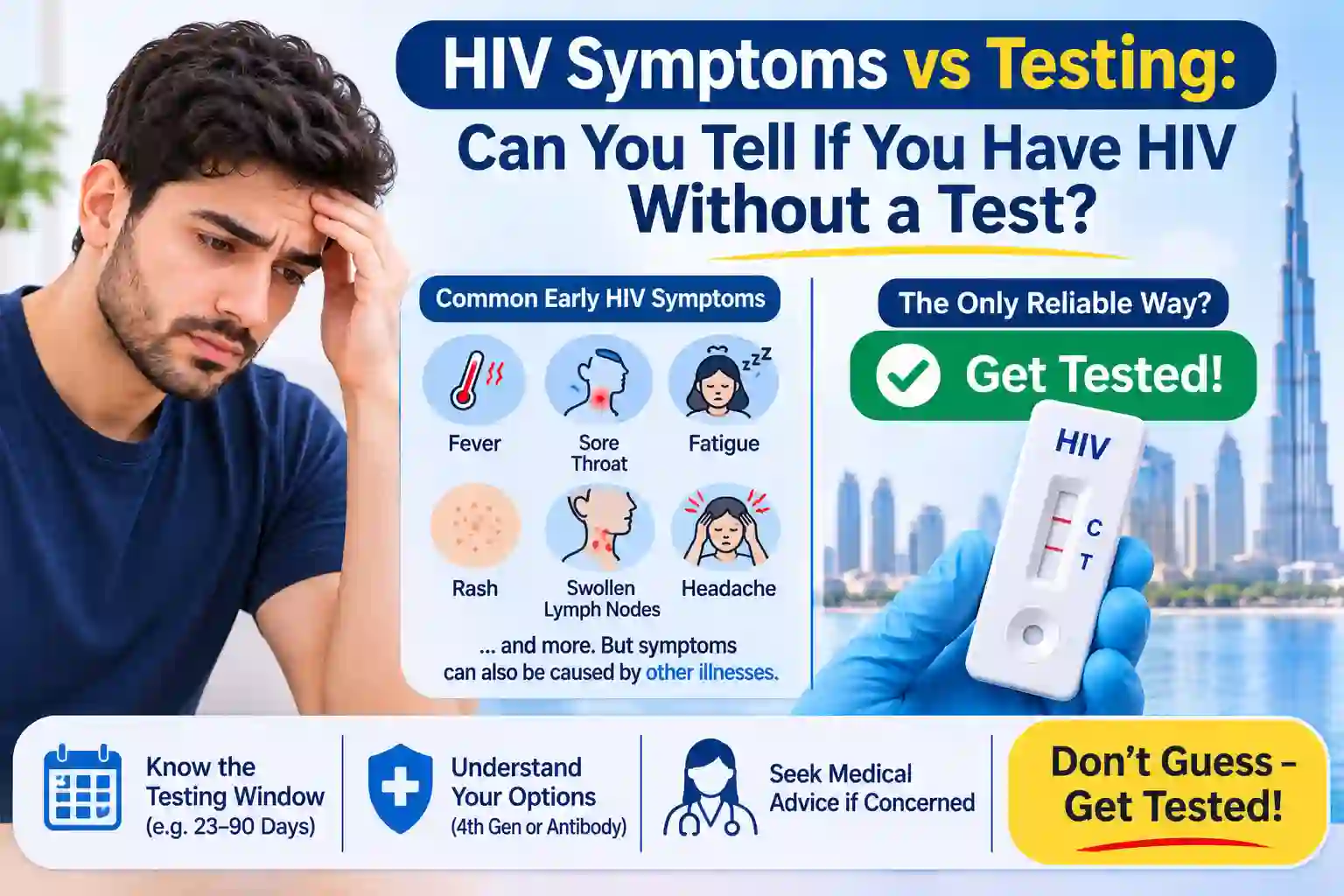
Many people become concerned about HIV after noticing unusual symptoms such as fever, fatigue, a sore throat, swollen lymph nodes, or a skin rash. Others may have had a possible exposure but feel completely healthy.
This often leads to an important question: Can you tell whether you have HIV by looking at your symptoms?
The answer is no. HIV symptoms can vary considerably from person to person, and some people experience no noticeable symptoms for years. Even when symptoms occur, they can resemble common illnesses such as influenza or other viral infections.
The only reliable way to determine your HIV status is through appropriate HIV testing.
If you are looking for information about HIV symptoms or an HIV test kit in Dubai, Sharjah, Abu Dhabi, or elsewhere in the UAE, this guide explains what to watch for, when to get tested, and why testing is more reliable than symptom checking.
1. What Are the Early Symptoms of HIV?
Some people develop flu-like symptoms during the early stage of HIV infection, also known as acute HIV infection.
These symptoms may appear approximately two to four weeks after infection, although the timing and severity vary.
Possible early symptoms include:
Fever
Sore throat
Headache
Fatigue or unusual tiredness
Swollen lymph nodes
Skin rash
Muscle and joint aches
Night sweats
Mouth ulcers
Diarrhoea
Not everyone experiences these symptoms. Some people have only mild symptoms, while others do not notice anything unusual.
Important: Experiencing these symptoms does not mean you have HIV. Many other infections and medical conditions can cause similar symptoms.
Equally, feeling healthy does not mean you are definitely HIV-negative.
2. Can You Have HIV Without Any Symptoms?
Yes. A person can have HIV without experiencing noticeable symptoms.
After the initial stage, HIV can enter a chronic stage in which the virus remains active in the body but may not cause obvious illness.
During this period:
You may feel completely healthy.
You may continue your normal daily activities.
You may have no visible signs of infection.
HIV can still be present in the body.
Without appropriate treatment, HIV can gradually damage the immune system over time.
This is why waiting for symptoms before getting tested is not a reliable approach.
If you have had a possible exposure, consider testing according to the recommended window period, even if you feel perfectly well.
3. HIV Symptoms vs Common Illnesses: Why It Is Difficult to Tell
One reason people become confused about HIV symptoms is that many of them overlap with ordinary illnesses.
For example:
| Symptom | Possible alternative causes |
|---|---|
| Fever | Flu, COVID-19, and other infections |
| Sore throat | Viral or bacterial throat infections |
| Skin rash | Allergies, skin irritation, and viral infections |
| Fatigue | Poor sleep, stress, and many medical conditions |
| Swollen lymph nodes | Common infections and inflammatory conditions |
| Headache | Dehydration, stress, and other illnesses |
| Night sweats | Infections, medication effects, and other conditions |
These symptoms cannot identify HIV on their own.
Searching online for symptoms and comparing them with your experience may increase anxiety without giving you a reliable answer.
Instead of trying to diagnose yourself through symptoms, focus on whether a possible exposure occurred and whether an HIV test is appropriate.
4. When Should You Take an HIV Test?
The timing of an HIV test matters because different tests detect infection at different stages.
The period between a possible exposure and the time a test can reliably detect HIV is called the window period.
According to the US Centers for Disease Control and Prevention (CDC), typical detection windows are:
| Test type | Typical detection window |
|---|---|
| NAT (Nucleic Acid Test) | 10–33 days |
| Laboratory antigen/antibody test using venous blood | 18–45 days |
| Rapid antigen/antibody test using finger-prick blood | 18–90 days |
| Antibody test | 23–90 days |
These are general ranges, not guarantees for every product or individual.
If you test too early, the result may be negative even if infection has occurred. Follow the manufacturer's instructions and healthcare professional's advice about repeat testing.
If you have taken PEP or PrEP, your testing schedule may need to be adjusted by a healthcare professional.
For a more detailed explanation, read our guide:
When Should You Take an HIV Test After Exposure? A UAE Testing Timeline
5. Should You Choose a 4th Generation HIV Test or an Antibody Test?
Different HIV tests look for different markers of infection.
HIV 4th Generation Test
A fourth-generation antigen/antibody test looks for:
HIV antibodies.
p24 antigen, a protein associated with HIV.
Laboratory-based fourth-generation tests using blood from a vein generally detect infection earlier than antibody-only tests.
HIV Antibody Test
An antibody test looks for antibodies produced by the immune system in response to HIV.
Many rapid and home HIV self-tests use this method. They can offer a convenient screening option, but their window period must be considered.
The choice depends on the timing of possible exposure, sample type, test specifications, and whether you need professional assessment.
You can read our detailed comparison here:
HIV 4th Generation Test vs HIV Antibody Test
6. Can an HIV Home Test Kit Detect HIV Without Symptoms?
Yes. HIV tests detect specific markers associated with infection, not the symptoms a person experiences.
This means a suitable HIV test may detect infection even when someone feels completely healthy.
Home HIV self-tests can be useful for initial screening when used correctly and at the appropriate time.
Before choosing a home test kit, check:
Whether it detects HIV antibodies or both antigen and antibodies.
The recommended detection window.
The required sample type.
The manufacturer's instructions.
The expiry date and storage requirements.
What follow-up is required after a reactive result.
A home self-test is a screening tool. A reactive result requires follow-up testing through a qualified healthcare provider.
A negative result obtained during the window period may also require repeat testing.
7. What Should You Do If You Think You Have HIV Symptoms?
If you have symptoms that concern you, consider the following steps.
Step 1: Do not assume the symptoms mean HIV
Fever, fatigue, rash, and swollen lymph nodes can have many different causes.
Step 2: Consider whether a possible exposure occurred
Think about whether you may have had an exposure that could transmit HIV. A healthcare professional can help assess the risk.
Step 3: Seek urgent medical advice if exposure was recent
If a possible significant exposure occurred within the previous 72 hours, seek urgent medical assessment for PEP. PEP should be started as soon as possible, ideally within 24 hours, and no later than 72 hours when indicated.
Do not wait for symptoms or a home test result before seeking assessment.
Step 4: Choose the appropriate HIV test
A healthcare professional can recommend a test based on your exposure date, medical history, and testing needs.
Step 5: Follow up on the result
A reactive screening result requires further testing. A negative result may require repetition if it was taken before the end of the relevant window period.
8. Where Can You Find HIV Testing Options in the UAE?
People living in Dubai, Sharjah, Abu Dhabi, Ajman, Fujairah, and other UAE locations can explore different HIV screening options depending on their circumstances.
Some people prefer clinic-based testing, while others may consider home screening for convenience and privacy.
If you are comparing home HIV test kits, you can review the following SureTestKit pages:
HIV 4th Generation Antigen/Antibody Test Kit
Explore All Available Test Kits
Review the exact specifications and detection window of each product before ordering.
Remember that home testing is not a replacement for urgent medical care after a recent possible exposure.
9. Why Early HIV Testing Matters
Knowing your HIV status is an important part of looking after your health.
If someone receives an HIV diagnosis, effective treatment can help them live a long and healthy life. Antiretroviral therapy (ART) reduces the amount of HIV in the body and helps protect the immune system.
People who achieve and maintain an undetectable viral load through treatment do not sexually transmit HIV. This is known as Undetectable = Untransmittable (U=U).
Testing also helps people who receive a negative result make informed decisions about prevention, including discussing PrEP with a healthcare professional when appropriate.
The key is to avoid relying on symptoms alone.
Frequently Asked Questions
1. What are the first signs of HIV in men?
Possible early symptoms can include fever, sore throat, fatigue, swollen lymph nodes, rash, headache, and muscle aches. However, some men experience no symptoms, and these signs cannot confirm HIV.
2. What are the first signs of HIV in women?
Women may experience the same early flu-like symptoms as men, including fever, fatigue, rash, sore throat, and swollen lymph nodes. Symptoms vary, and some people have none.
3. Can HIV remain undetected without symptoms?
Yes. HIV can remain present in the body without noticeable symptoms. Testing is necessary to determine HIV status.
4. Can a normal blood test detect HIV?
Not necessarily. A routine blood count or general blood test does not automatically test for HIV. A specific HIV screening or diagnostic test is required.
5. Can an HIV test be negative even if I have symptoms?
Yes. A negative result may occur if testing is performed during the window period. Symptoms alone cannot determine HIV status, so follow the recommended testing schedule.
6. How soon do HIV symptoms appear?
Some people develop acute symptoms approximately two to four weeks after infection. Others have no noticeable symptoms. Testing, not symptom timing, is the reliable way to assess HIV status.
7. Can I use a home HIV test if I have no symptoms?
Yes. A suitable home HIV self-test can be used for screening even when you have no symptoms. Follow its instructions and detection window, and obtain professional follow-up if the result is reactive.
8. Where can I buy an HIV test kit in Dubai?
You can explore available HIV screening products through SureTestKit's HIV testing collection. Check the product specifications and instructions before choosing a kit.
Final Thoughts
HIV cannot be diagnosed by looking at symptoms, and the absence of symptoms does not rule out infection.
Whether you are in Dubai, Sharjah, Abu Dhabi, or elsewhere in the UAE, the most reliable approach is to understand your possible exposure risk, select an appropriate HIV test, and follow the recommended testing window.
If you are concerned about a recent exposure, seek medical advice promptly. If you are considering routine screening, compare available testing options and follow the manufacturer's instructions.
Do not guess your HIV status from symptoms. Get tested at the appropriate time.
Medical disclaimer: This article provides general educational information and does not replace professional medical advice, diagnosis, or treatment.
Disclaimer
This content is intended for informational purposes only and should not be considered a substitute for professional advice. Always consult with a qualified professional for specific concerns.