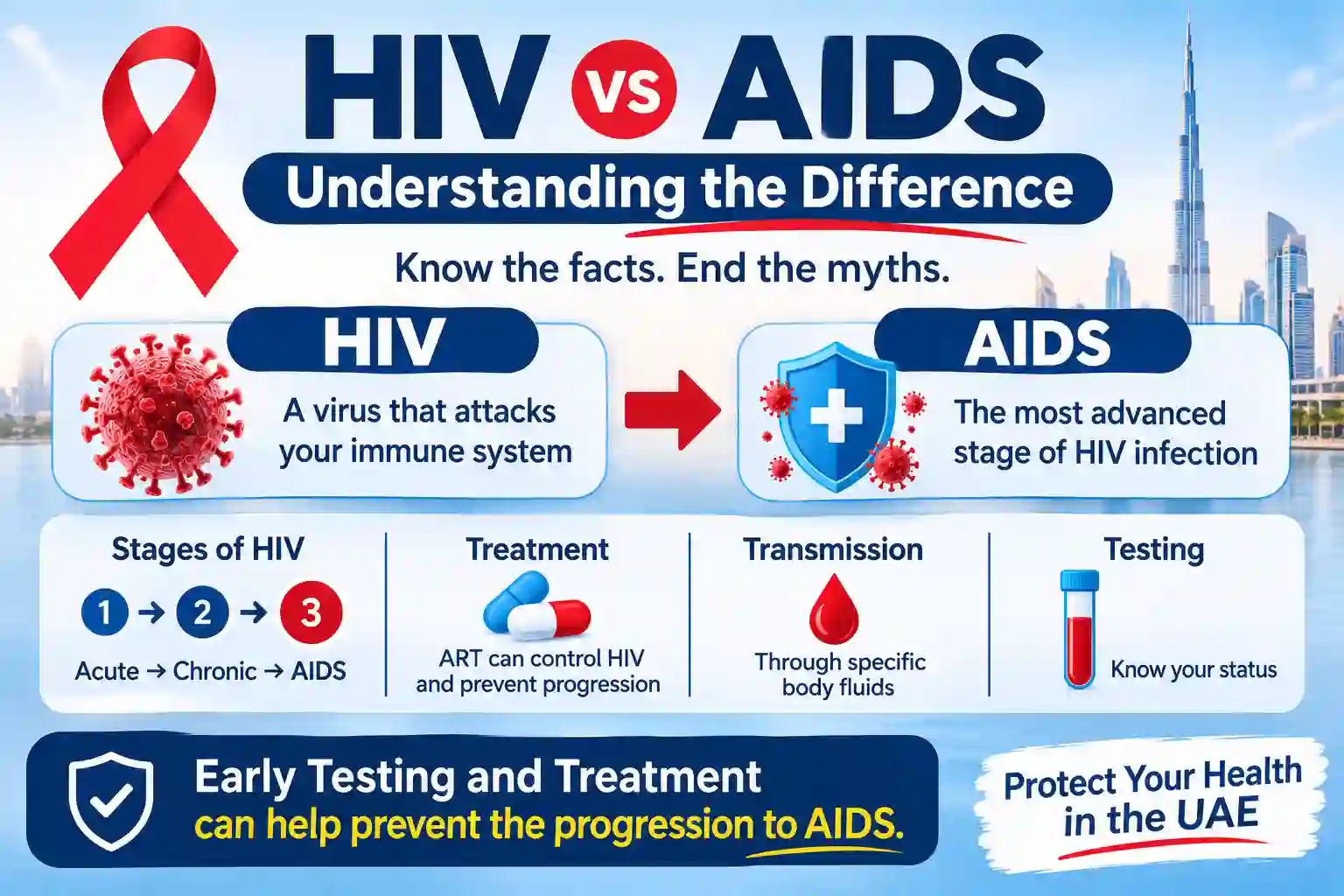
Many people use the terms HIV and AIDS interchangeably, but they are not the same thing. Understanding the difference between HIV and AIDS is important because an HIV diagnosis today is not the same as it was decades ago.
With advances in medical treatment, people living with HIV can manage the infection, protect their immune system, and live long, healthy lives. Many people receiving effective treatment never develop AIDS.
If you are searching for information about HIV in Dubai, Abu Dhabi, Sharjah, or anywhere in the UAE, this guide explains what HIV is, what AIDS means, how the infection progresses, and why early testing matters.
1. What is HIV?
HIV stands for Human Immunodeficiency Virus.
It is a virus that attacks the immune system, particularly CD4 cells (also called CD4 T cells), which play an important role in helping the body fight infections.
When HIV enters the body, it infects certain immune cells and uses them to reproduce. Over time, without treatment, HIV can damage the immune system and make it more difficult for the body to fight infections and certain illnesses.
HIV does not necessarily cause noticeable symptoms immediately. Some people experience flu-like symptoms during the early stage, while others may feel completely normal.
HIV is a manageable chronic condition with effective treatment. Antiretroviral therapy (ART) helps control the virus, protect the immune system, and prevent progression of the disease.
2. What is AIDS?
AIDS stands for Acquired Immunodeficiency Syndrome.
It is the most advanced stage of HIV infection, when the immune system has become severely damaged.
A person with HIV may develop AIDS if the infection remains untreated or is not adequately controlled and the immune system becomes severely weakened.
AIDS may be diagnosed when a person with HIV has a CD4 count below 200 cells/mm³ or develops certain AIDS-defining illnesses, regardless of their CD4 count.
These illnesses can include particular opportunistic infections and cancers that occur more frequently when the immune system is severely compromised.
AIDS is not a separate virus. It is an advanced stage of HIV infection.
3. HIV vs AIDS: What is the difference?
| HIV | AIDS |
|---|---|
| HIV is a virus. | AIDS is the most advanced stage of HIV infection. |
| It attacks the immune system. | It occurs when immune damage becomes severe or certain defining illnesses develop. |
| A person can have HIV without symptoms. | A person may develop serious opportunistic infections or illnesses. |
| HIV can be managed with antiretroviral treatment. | Treatment is essential and can improve immune function and health. |
| Early diagnosis and treatment can prevent progression. | It is not inevitable for someone with HIV to develop AIDS. |
The key takeaway is that HIV does not automatically mean AIDS.
With early diagnosis and effective treatment, progression to AIDS can often be prevented.
4. What are the stages of HIV infection?
HIV infection is generally described in three stages.
Stage 1: Acute HIV infection
This is the early stage of HIV infection, generally occurring within the first few weeks after acquiring the virus.
Some people experience flu-like symptoms, such as:
Fever
Headache
Sore throat
Rash
Muscle aches
Swollen lymph nodes
Fatigue
These symptoms can also occur with many other illnesses. Some people with acute HIV experience no noticeable symptoms at all.
During this stage, the virus can multiply rapidly.
Stage 2: Chronic HIV infection
This stage is also known as chronic HIV infection or clinical latency.
HIV remains active in the body but may reproduce at lower levels than during acute infection. People can remain in this stage for years, especially if they receive effective treatment.
Many people feel healthy and do not experience symptoms.
Without treatment, HIV may continue damaging the immune system. With consistent treatment, people can often maintain their health and prevent the disease from progressing.
Stage 3: AIDS
AIDS is the most advanced stage of HIV infection.
At this stage, immune damage can make the body vulnerable to serious infections and certain cancers.
Possible conditions include:
Severe or recurrent infections
Certain types of pneumonia
Tuberculosis
Serious fungal infections
Some AIDS-associated cancers
AIDS requires professional medical care, and treatment can still be beneficial. Starting or continuing HIV treatment can help suppress the virus and allow the immune system to recover.
5. Can HIV turn into AIDS?
Yes, untreated HIV can progress to AIDS over time.
However, this progression is not inevitable.
Modern HIV treatment can suppress viral replication and protect immune cells. People who start and maintain effective treatment can prevent progression to AIDS.
This is why early testing and access to treatment are so important.
You do not need to wait for symptoms to appear before getting tested.
6. Is HIV curable?
Currently, there is no widely available cure for HIV.
However, HIV can be effectively controlled with antiretroviral therapy (ART). Treatment reduces the amount of virus in the blood, often to an undetectable level.
People living with HIV who take their medication consistently and maintain medical follow-up can live long and healthy lives.
An undetectable viral load maintained through effective treatment also means HIV is not sexually transmitted — known as U=U (Undetectable = Untransmittable).
This is an important scientific fact that helps reduce HIV stigma.
7. How is HIV transmitted?
HIV can be transmitted through certain body fluids when specific exposure conditions are present.
Common transmission routes include:
Anal or vaginal sex involving exposure to HIV
Sharing contaminated needles or injecting equipment
Exposure to infected blood
Transmission from mother to child during pregnancy, childbirth, or breastfeeding
HIV does not spread through:
Hugging or shaking hands
Sharing food or utensils
Using the same toilet
Sweat or tears
Mosquito bites
Casual contact at work or home
Understanding the actual transmission routes helps prevent unnecessary fear and stigma.
8. Why is HIV testing important?
Testing is the only reliable way to know your HIV status.
Some people may have HIV without symptoms for years. A person cannot determine their HIV status by appearance, physical health, or how they feel.
Testing is particularly important if you have experienced a possible exposure or have never been tested and would benefit from routine screening.
Different tests have different detection windows. Testing too early after exposure may produce a negative result that needs to be repeated.
If you have had a possible exposure within the last 72 hours, seek urgent medical assessment to determine whether HIV post-exposure prophylaxis (PEP) is appropriate. PEP is time-sensitive and should be started as soon as possible when indicated.
9. HIV testing options in the UAE
People in Dubai, Abu Dhabi, Sharjah, and across the UAE can seek HIV testing through qualified healthcare providers and appropriate testing services.
Home HIV self-tests may be an option for initial screening for some people. However, you should understand:
What the test detects
Whether it is an antibody test or antigen/antibody test
The sample type
The window period
How to interpret results
When repeat or confirmatory testing is required
A reactive self-test result is not a confirmed diagnosis and must be followed by appropriate testing.
You can explore screening options through SureTestKit HIV test kits.
Related products:
Always check individual product instructions and specifications before selecting a test.
Frequently Asked Questions
Is HIV the same as AIDS?
No. HIV is the virus that attacks the immune system. AIDS is the most advanced stage of HIV infection.
Can a person with HIV live a normal life?
Yes. With effective treatment, regular medical care, and adherence to medication, many people living with HIV can live long and healthy lives.
Does everyone with HIV develop AIDS?
No. Effective treatment can prevent HIV from progressing to AIDS. Many people who receive and maintain treatment never develop AIDS.
Can AIDS be treated?
Yes. Medical treatment for HIV can suppress the virus, help the immune system recover, and treat or prevent opportunistic illnesses. Prompt medical care is important.
Can you have HIV without symptoms?
Yes. Many people may have no noticeable symptoms for a long period. Testing is necessary to know your status.
How can I know whether I have HIV?
Take an appropriate HIV test at the recommended time after possible exposure. If the test is reactive, follow up with a healthcare provider for confirmatory testing.
Conclusion
HIV and AIDS are related, but they are not the same.
HIV is a virus that attacks the immune system. AIDS is the most advanced stage of HIV infection that may develop without effective treatment.
Today, HIV is a manageable medical condition for many people. Early testing, appropriate treatment, and ongoing care can help prevent progression to AIDS and support a long, healthy life.
If you are in Dubai, Abu Dhabi, Sharjah, or anywhere in the UAE and want to understand your HIV status, informed testing is a positive first step.
Know your status. Understand the facts. Take control of your health.
Explore HIV screening information at SureTestKit UAE.
This article is for educational purposes only and does not replace professional medical advice or diagnosis.
Disclaimer
This content is intended for informational purposes only and should not be considered a substitute for professional advice. Always consult with a qualified professional for specific concerns.